support@yorubalibrary.com
+2348073529208
This chapter builds directly on the last chapter, as we continue in our summary of Eégún Aláré, the story has reached its most intense dramatic height, the narrative moves beyond simple theatrical success into the dangerous realm of human envy, spiritual transformation, and sudden tragedy. Ọ̀jẹ́ládé’s extraordinary success, while celebrated by the ruler and ordinary townspeople, begins to attract jealousy from local rivals and senior masquerade practitioners who feel overshadowed by his effortless brilliance. In traditional Yorùbá narrative traditions, supreme talent rarely exists without triggering reactionary forces from those who feel their authority or relevance
threatened. 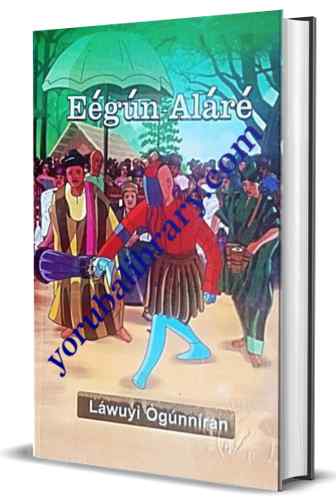 This section presents one of the most famous and chilling episodes in Yorùbá dramatic literature: Ọ̀jẹ́ládé’s dramatic metamorphosis into a crocodile during a public performance, followed by the catastrophic interference of his rivals. Rather than celebrating the miracle of performance art, his adversaries seize upon a moment of vulnerability to lock him into his animal form, setting off a chain reaction of sorrow and frantic countermeasures. For students studying this text for WAEC and NECO, this segment offers insights into how ancient Yorùbá authors weave moral lessons around trust, rivalry, and the double-edged sword of public fame.
Furthermore, this chapter highlights the emotional bond between Ọ̀jẹ́ládé and his devoted entourage, particularly his loyal servant Ọ̀jẹ́kúnlé and his newly wedded wife. As physical forms break down and spiritual realities take over, the story examines the lengths to which true love and loyalty will go to reverse a curse. The scene transitions from a high-energy public carnival into a desperate race against time and nature, creating an unmissable masterpiece of dramatic tension.
The Climax of Performance and Shocking Metamorphosis
1) The Grand Arena Display: Staging another massive performance before a packed crowd including the Baálẹ̀ and local dignitaries, Ọ̀jẹ́ládé reaches the peak of his theatrical illusions.
2) The Crocodile Transformation: In a crowning demonstration of his inherited power, Ọ̀jẹ́ládé chants potent incantations (ọ̀fọ̀) and transforms his physical body entirely into a massive, live crocodile right in the center of the arena (ojú agbo).
3) Treachery and Envy from Rivals: Seeing him in this helpless, non-human state, senior local masquerade figures (àgbà Ọ̀jẹ́) and envious rivals conspire against him. Refusing to utter the necessary restoring chants, they secretly apply a neutralizing spell/charm (òògùn èrò) that prevents Ọ̀jẹ́ládé from changing back into a human being.
Panic, The Desperate Search, and Environmental Interventions
a) Despair in the Arena:
Realizing that their master is trapped in reptile form and thrashing helplessly on the ground, Ọ̀jẹ́ládé’s young servant Ọ̀jẹ́kúnlé and his entourage burst into passionate lamentations and weeping.
b) The Race for the Counter-Charm:Ọ̀jẹ́kúnlé frantically dashes off toward their home town to retrieve the special antidote gourd (àdó èrò) left behind by Ọ̀jẹ́ládé’s father to reverse complex spells.
c) Nature Intervenes:
Before Ọ̀jẹ́kúnlé can return, a sudden heavy downpour floods the arena and surrounding streets. The torrential runoff (àgbàrá òjò) sweeps the trapped crocodile away from the performance ground and washes him directly into a deep river flowing through the town.
The Final Farewell Chant and Tragic Transition
(1) Emergence at the Riverbank:
Emerging near the riverbank where a local woman is washing cassava, Ọ̀jẹ́ládé—still in crocodile form—begins to speak with a human voice, lamenting his tragic fate and sending his final emotional farewells to his parents, wife, and family.
(2) The Final Reversal:
As the woman flees in terror, the magical residue on the riverbank enables Ọ̀jẹ́ládé to shed the crocodile skin one last time. The corn remains (eeri) that touches his body is an antidote for the spell casted on him, on touching his body, he fully transformed back to human being.
Detailed Character Breakdown
(i) Ọ̀jẹ́ládé:
A tragic hero whose supreme talent and overconfidence blind him to the lethal envy of his peers, leading to his undoing.
(ii) Ọ̀jẹ́kúnlé:
The quintessential loyal apprentice/servant, whose rapid actions and grief show unalloyed devotion to his master.
(iii) The Envious Elders (Àgbà Ọ̀jẹ́):
Antagonists representing malicious jealousy, destruction of talent, and abuse of traditional spiritual knowledge.
Key Themes and Moral Lessons
a) The Danger of Unchecked Envy (Owu Jije):
Highlights how human malice can destroy exceptional talent when society fails to restrain professional jealousy.
b)The Impermanence of Earthly Glory:
Demonstrates how public applause can instantly turn into tragedy when spiritual vigilance is neglected.
What Happened Next?
Now that Ọ̀jẹ́ládé’s dazzling career has ended in a heart-wrenching mystical departure, what becomes of his family and his title? How will the kingdom of Ọ̀yọ́ honor his memory, and what lasting lessons does his story has for the entire masquerade tradition?
BROWSE OTHER AVAILABLE WAEC/NECO TEXTS
Eégún Aláré

Òtè Òye
CONNECT WITH US: