support@yorubalibrary.com
+2348073529208
Act 4, Scene 3 is one of the most important turning points in Ọ̀tẹ̀ Oyè because the conspiracy begins to collapse from within. In the earlier scenes, Gbádàmọ́ṣí and his allies were primarily concerned with one objective: controlling the succession to the throne. They were prepared to use money, secret agreements and political influence to achieve it. They even attempted to bypass or manipulate the traditional role of Ifá.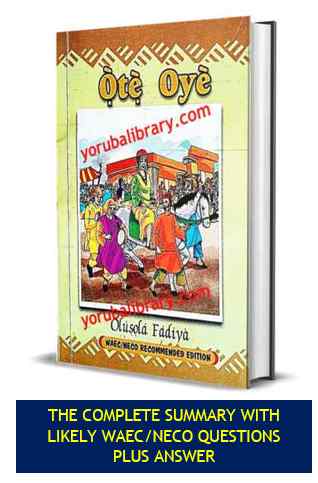 But by this stage, the consequences of their actions are becoming impossible to ignore. The conspiracy is no longer simply a political problem, it has become a moral and spiritual crisis. Some of the Kingmakers begin to question whether they have gone too far. They fear the consequences of interfering with the oracle and violating the traditional order. The atmosphere therefore changes from confidence to anxiety, from ambition to fear, and from secrecy to impending disgrace.
What Happens in Act 4, Scene 3?
The scene focuses on the growing disagreement among the Kingmakers and conspirators. The secret that they once protected is becoming increasingly difficult to contain. More importantly, some members of the group begin to realize that the attempt to bypass the traditional process may have serious consequences. One of the conspirators expresses doubt about what they have done to the voice or authority of Ifá.
1) The Conspirators Begin to Question Their Actions
The conspirators had previously behaved as though political power could solve every problem. Money could influence people, political connections could influence the Kingmakers, secret oaths could keep people silent, and the traditional process could supposedly be manipulated.
2) Act 4, Scene 3 challenges that belief.
Some of the conspirators begin to recognize that there may be limits to human power. Their interference with Ifá has created a new source of fear. They begin to wonder whether the conspiracy has crossed a boundary that should not have been crossed, this is the beginning of the moral collapse of the group.
3) Divine or traditional order
Represented by Ifá and the legitimate traditional process. Its characteristics include:
• legitimacy;
• guidance;
• order;
• respect for inherited institutions;
• protection of the community.
The conspirators believe they can defeat the second through the first. Act 4, Scene 3 begins to show that they cannot.
4) “A kì í fi Òrìṣà ṣẹ̀fẹ̀”
One of the most important expressions associated with this section is: “A kì í fi Òrìṣà ṣẹ̀fẹ̀.” The expression has a serious warning. It means that divine powers or sacred institutions should not be treated as objects of mockery or manipulation. Within the context of the play, the expression is particularly significant because the conspirators attempted to interfere with a process connected to Ifá. Their actions therefore have consequences beyond ordinary political disagreement. The expression also supports a central moral principle of the drama: Human beings should not assume that ambition gives them unlimited power.
5) Fear of Spiritual Consequences
Some of the Kingmakers begin to fear ìyọnu tẹ̀mí—spiritual consequences that may follow their actions. This fear causes them to reconsider their earlier decisions. The important point is that they are not necessarily becoming morally courageous immediately, rather, fear forces them to think again. They begin to realize that the conspiracy may bring consequences upon them personally.
6) Gbádàmọ́ṣí: Aggression Under Pressure
Gbádàmọ́ṣí remains committed to his plan, but his confidence is beginning to look different. Earlier, his confidence came from the belief that he controlled the situation. Now his aggression increasingly serves to silence people who are becoming afraid, he becomes more forceful because disagreement within his own group threatens the conspiracy. This reveals an important psychological development.
7) Majasan: The Nervous Conspirator
Majasan becomes particularly important in understanding the psychological effect of the conspiracy. Earlier, he participated in the political plot, but as the consequences become more obvious, fear grows within him, He becomes one of the characters most concerned about safety and what may happen to the conspirators. His fear helps reveal the difference between political ambition and moral courage. He was willing to participate when the conspiracy seemed capable of succeeding, now that the conspiracy is threatened, he begins to think about consequences.
The Conspiracy Is Losing Its Unity
A conspiracy requires trust among its members, but trust is becoming difficult. Why? Because everyone is beginning to wonder:
• Who will be exposed?
• Who will be blamed?
• Who will escape punishment?
• Who will reveal the secret?
• What will happen spiritually?
• What will happen if the people discover everything?
Truth Is Becoming Unstoppable
One of the important themes in this section is the courage of truth. The truth is no longer confined to whispers, it is spreading. As it spreads, people who were previously silent begin finding their voices. This is why the conspiracy becomes increasingly difficult to control. Once enough people know what has happened, intimidation becomes less effective.
The Significance of the Stage Atmosphere
The atmosphere surrounding this section is tense and heavy. There is a strong sense of:
• suspicion;
• fear;
• anxiety;
• uncertainty;
• impending exposure.
Major Themes in Act 4, Scene 3
1. Spiritual Consequences
The characters begin to fear the consequences of interfering with Ifá and the traditional spiritual order.
2. Conscience
Some conspirators begin to question whether they have gone too far. Their hesitation shows the return of conscience after a period of political ambition.
3. Public Disgrace
The fear of ẹ̀sin (shame) shows that reputation matters greatly in the community. The chiefs do not merely fear punishment; they fear becoming objects of public shame.
4. Tradition Versus Political Manipulation
The conspirators attempted to bend traditional institutions to serve personal ambition. The scene shows the danger of such manipulation.
Character Roles
a) Gbádàmọ́ṣí
Gbádàmọ́ṣí remains the most aggressive defender of the conspiracy. His determination shows the depth of his ambition. However, his increasing aggression also reveals that the conspiracy is becoming harder for him to control.
b) Majasan
Majasan represents fear and growing uncertainty. His increasing concern about the consequences of the conspiracy makes him different from the more aggressive Gbádàmọ́ṣí. He is therefore important in showing the internal weakness of the conspiracy.
c) The Kingmakers
The Kingmakers represent the institution responsible for the succession process. Their involvement in the conspiracy shows how an institution can become corrupted when individuals put personal interest above communal responsibility. Their growing fear also demonstrates that corruption eventually creates consequences for the people who participate in it.
Moral Lessons
1. Do not abuse sacred institutions for selfish purposes: The attempt to manipulate Ifá demonstrates the danger of using tradition merely as a tool for personal ambition.
2. Greed can blind people to consequences.
The conspirators initially focus on what they will gain and fail to consider what they may lose.
3. Wrongdoing creates fear.
Once people know they have acted wrongly, fear of exposure and punishment can begin to control them.
CONNECT WITH US: