support@yorubalibrary.com
+2348073529208
Act 5, Scene 5 of Ọ̀tẹ̀ Oyè presents the consequences of a political conspiracy that has begun to collapse under public pressure. In earlier scenes, the conspirators attempted to influence the succession process, conceal their arrangements and advance their preferred candidate. By this stage, their plans have encountered serious resistance, and the public's anger has entered their private discussions.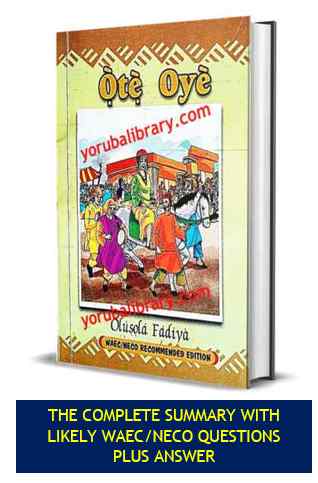 The scene takes place behind closed doors. Instead of confidently working together to achieve their original objective, the conspirators begin arguing about responsibility and considering what they should do next. Their mood is desperate, angry and fearful. The pressure from the town has exposed the weakness of their alliance and forced them to think about the consequences of their actions.
An important concern in the scene is ìwẹ̀nùmọ́, or cleansing. The bribery and false oaths associated with the conspiracy are treated as sources of moral and spiritual pollution that must be addressed. Ariwoola's humility and respect for tradition, together with Balógun Akíngbọlá's continued defence of established principles, provide a contrast with the conspirators' conduct.
Detailed Summary of Act 5, Scene 5
1) The conspirators retreat behind closed doors
The scene takes place in a private setting, but the pressure from the streets is strongly felt. The conspirators withdraw to discuss their next move as the public outcry grows.
This change of setting is significant. In earlier scenes, secrecy gave the conspirators a sense of control. They could meet privately, discuss their plans and attempt to manipulate the succession process away from public scrutiny. Now, their private meeting is not a sign of renewed strength. It reveals their need to find a way out of a situation that has become increasingly difficult to manage.
2) The conspirators begin arguing over blame
One of the central developments in the scene is the argument among the conspirators over who is responsible for the failure of their plan. Their relationship has changed. Earlier, they worked together to advance a common political objective. Now that the plan is in danger, they begin questioning one another and looking for ways to protect themselves.
This behaviour exposes the weakness of their alliance. Their cooperation was tied to the expectation that the conspiracy would benefit them or produce the outcome they wanted. When the scheme encounters serious opposition, their unity becomes less reliable.
3) The mood becomes desperate, angry and fearful
The conspirators' emotional state is a major feature of the scene. They are desperate because their plan is failing, angry because events have not followed their expectations, and fearful because they must now consider the consequences.
These emotions help the audience understand the extent of the internal collapse. The conspirators are no longer acting with the confidence associated with their earlier planning. Their attention has shifted from controlling the succession process to finding a way to escape the danger surrounding them.
4) Public pressure continues to influence the private meeting
Although the scene takes place behind closed doors, the public outcry remains a powerful force. The conspirators cannot simply ignore what is happening outside or assume that a private discussion will restore their former position.
This relationship between the public and private settings is important to the drama. The public confrontation has made the conspiracy vulnerable, while the private meeting shows how deeply that vulnerability has affected those responsible.
The scene prepares for the restoration of the throne's dignity
The book identifies the sovereignty and sanctity of the crown as important themes. The throne is not presented as an ordinary possession that can be purchased or controlled by a wealthy individual.
The conspiracy has threatened this dignity by allowing private ambition and improper financial influence to interfere with the succession process. The growing recognition of the consequences, together with the need for cleansing, points towards the restoration of legitimate order. The dramatic movement is therefore from the attempted manipulation of the throne towards recognition that the institution must be treated with respect.
This does not mean that every issue is automatically resolved in this scene. Its principal function is to show the conspirators' internal collapse and the need to address the moral and spiritual pollution associated with their actions.
Character Analysis
1) Gbádàmọ́ṣí: A conspirator facing the consequences
Gbádàmọ́ṣí has been a principal strategist in the plot to influence the succession process. His earlier ambition and attempts to control events have contributed to the crisis.
By this stage, the conspiracy has encountered public resistance, and the conspirators are arguing over responsibility. Gbádàmọ́ṣí's position must therefore be understood against the collapse of the arrangement he helped organise.
2) Majasan: Fear and the burden of involvement
Majasan has been portrayed throughout the conspiracy as more fearful and hesitant than Gbádàmọ́ṣí. The collapse of the plan intensifies the importance of his fear and uncertainty.
In this final scene, the conspirators' concerns about blame, disgrace and the consequences of their conduct shows the growing pressure on everyone associated with the plot. Majasan's earlier hesitation makes him particularly relevant to a discussion of conscience and fear.
3) Ariwoola: Humility and respect for tradition
Ariwoola's humility and respect for tradition provide a contrast with the conspirators' ambition. The significance of his conduct lies in the values it represents. The throne requires a person who recognises the importance of the institution and the responsibilities attached to leadership, rather than someone who regards it merely as an opportunity for personal advantage.
4) Balógun Akíngbọlá: Guardian of legitimate tradition
Balógun Akíngbọlá remains the strongest defender of the old ways in this part of the play. His importance lies in his insistence that the throne and its succession process should not be corrupted by private ambition. He represents the responsibility to preserve the integrity of traditional institutions and protect the welfare of Ojúrí.
Major Themes in Act 5, Scene 5
a) The collapse of a corrupt alliance
The conspirators retreat into a private meeting and begin arguing about who is responsible for the failure of their plan.
b) Shame as a form of punishment — Ìtìjú
Shame is an important theme because the conspirators fear the public disgrace that may follow the exposure of their conduct.
c) Spiritual pollution and cleansing
The scene connects the bribery and false oaths associated with the conspiracy with the need for cleansing.
d) The sovereignty and sanctity of the crown
The throne is treated as an institution of great importance, not as an ordinary possession to be acquired through money or influence.
Moral Lessons from Act 5, Scene 5
1. A conspiracy built on greed is unstable. When the plan fails, its participants begin to argue over blame instead of standing together.
2. Wrongdoing can damage reputation. The conspirators fear shame because their actions threaten the respect and status they once enjoyed.
3. Cleansing does not make wrongdoing harmless. The need for purification highlights the seriousness of the moral and spiritual pollution associated with bribery and false oaths.
4. The throne should not be treated as a commodity. Kingship carries responsibilities and traditional significance that cannot be replaced by money or political influence.
5. Humility is an important leadership quality. Ariwoola's respect for tradition contrasts with the conspirators' ambition.
Why Act 5, Scene 5 Matters
Act 5, Scene 5 is important because it shows the internal consequences of the conspiracy's collapse. The conspirators' arguments reveal that their alliance has become fragile, while their fear of shame and spiritual consequences exposes the burden of their actions.
The scene also deepens the play's treatment of kingship. The crown is not merely a political prize; it is an institution whose dignity depends on the integrity of the succession process and the conduct of those involved in it.
For students, the key to understanding the scene is to connect its events with its themes: the private argument reveals the collapse of the conspiracy; shame represents the social consequences of wrongdoing; cleansing represents the need to address moral and spiritual pollution; and the crown represents the dignity that must be put into order.
CONNECT WITH US: