support@yorubalibrary.com
+2348073529208
Act 1 concentrated largely on the death and mourning of Ọba Adéwúwo, the activities in the palace and the traditional rites performed after his death. In Act 2, the attention begins to move away from the immediate mourning and towards the question that must eventually be answered: Who will become the next king of Ojúrí?
Instead of opening inside the palace, this scene takes us to the farm path, where ordinary people are discussing what is happening in the kingdom. This change of setting is important. The succession of a king may be decided through traditional institutions and the kingmakers, but the people are watching, discussing and forming opinions about the process. The scene introduces Ìyá Òjò and Òrófó, and through their conversation we begin to hear the concerns of the common people.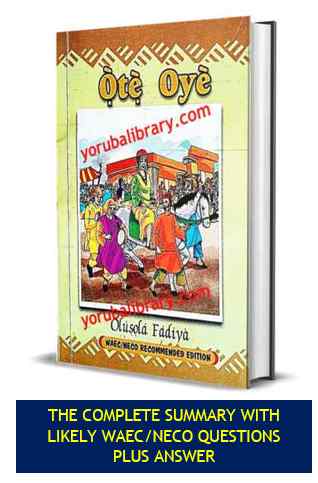 What Happens in Act 2, Scene 1?
The scene introduces a different side of the political situation in Ojúrí. The major developments include:
• Ìyá Òjò and Òrófó are seen on the farm path.
• Their conversation turns towards events surrounding the vacant throne.
• They discuss the possible successors to Ọba Adéwúwo.
• Ariwoola is mentioned as one of the possible candidates for the throne.
• The conversation shows that ordinary people are paying attention to what is happening among the traditional leaders.
• There is growing suspicion about secret activities connected with the palace.
• The possibility of Ọ̀tẹ̀ begins to become a concern.
• The scene establishes that the people have their own opinions about who should become king.
The importance of the scene is therefore not simply that two people are talking. The conversation gives the audience access to public opinion.
Why Does the Scene Move Away from the Palace?
The change from the palace to the farm path is significant. In Act 1, the audience mainly sees the formal side of the kingdom:
The king → The palace → The chiefs → Traditional ceremonies → Mourning
Act 2 begins to show another side:
The ordinary people → Public discussion → Rumours → Candidates → Fear about the succession
This gives the story a wider social dimension. The question of kingship is no longer something happening behind palace walls. People outside the palace are already interested in the outcome. This is particularly important because the play later develops a conflict between what the people want and what certain powerful individuals want.
Ìyá Òjò and Òrófó
1) Ìyá Òjò represents the ordinary people of Ojúrí who are interested in the future of their community. Her presence helps the audience understand that political decisions made by the palace affect people outside it. She is therefore important not because she controls the throne, but because she represents the public eye. The people may not sit among the kingmakers, but they are capable of observing events, discussing them and forming judgments.
2) Òrófó
Òrófó is associated with ìsọ̀fófó, or gossip and rumour-mongering. This is an important characteristic because information about political events does not always travel through official announcements. When people are uncertain about what powerful individuals are doing, rumours can quickly spread. Òrófó therefore helps introduce one of the social consequences of secrecy: When leaders hide important information, people begin to fill the gap with speculation. This becomes particularly relevant in a story built around a conspiracy surrounding the throne.
The People Are Watching the Throne
One of the most important ideas in this scene is that the people are not indifferent to the succession. They want to know:
• Who will become king?
• Is the process going to be peaceful?
• Which candidate is being considered?
• Can the traditional process be trusted?
• Are powerful people secretly influencing the choice?
The scene therefore establishes a connection between kingship and public confidence. A king does not rule in isolation. His emergence affects the entire community.
Who Is Ariwoola?
Ariwoola is introduced as one of the possible successors to the throne. The discussion surrounding him becomes important because the text later identifies him with the preference of the people. The key point for students is that Ariwoola represents a candidate whose position becomes connected with public choice. This creates an important contrast later in the drama.
The people may favour one person, while influential individuals may prefer another person for reasons that have little to do with the general interest of Ojúrí. That difference between public choice and private political interest is one of the foundations of the conflict in Ọ̀tẹ̀ Oyè.
The Growing Suspicion in Ojúrí
The scene also introduces suspicion. The people are beginning to become suspicious of the secret activities surrounding the palace. This does not yet reveal the full conspiracy, but it prepares the audience for what comes later. There is a gradual movement:
Mourning → Vacant throne → Discussion of successors → Suspicion → Political division → Conspiracy
This progression is important when studying the structure of the drama. The Ọ̀tẹ̀ does not suddenly appear at the end of the story. The conditions that allow it to develop are introduced gradually.
The Importance of Public Opinion
Act 2, Scene 1 gives ordinary people a voice. This matters because a political system can have official decision-makers while still having a wider public whose opinion influences the legitimacy of those decisions. The conversation between Ìyá Òjò and Òrófó shows that people are already discussing the next king before the succession has been settled. Later, the text makes the people's preference for Ariwoola more significant.
This creates a major conflict:
a) The people's interest
b) The people want a suitable successor who can lead Ojúrí.
c) The political interest
Some influential people begin to look at the throne in terms of their own interests and the kind of candidate they can influence. The difference between these two interests is one of the major problems developed in the drama, the traditional process therefore matters.
This is why the mention of Ifá becomes significant. Ifá is connected with seeking divine guidance concerning the choice. The succession is therefore presented as something that should not be reduced to personal ambition. It involves:
• tradition,
• suitability,
• communal interest,
• spiritual guidance,
• and the responsibility of those involved in choosing the ruler.
The Meaning of Ọ̀tẹ̀ Oyè Begins to Become Clearer
The title Ọ̀tẹ̀ Oyè becomes increasingly meaningful from this point in the drama. The text explains the expression in relation to plotting or conspiracy concerning the throne. In Yoruba, it can simply be explained as "Ìdìbùbà tàbí rìkíṣí lórí oyè ọba"
Major Themes in Act 2, Scene 1
1. Public Opinion
The scene introduces the views of ordinary people. The succession of a king is shown to be a matter of public concern rather than something completely disconnected from the community.
2. Gossip and Rumour
Through Òrófó, the play shows how information and speculation move among ordinary people. Where there is secrecy, rumours can grow.
3. Kingship and Succession
The death of Ọba Adéwúwo has created a political vacuum. The central question now becomes the identity of his successor.
4. Tradition
The choice of a new king is connected with traditional institutions and processes. The drama therefore establishes a foundation for the later conflict between traditional procedure and personal ambition.
5. Suspicion
The people are beginning to suspect that things may not be as straightforward as they appear. This suspicion prepares the audience for the conspiracy that will become more visible in later scenes.
6. Community Interest versus Personal Interest
The people want a king who will be suitable for Ojúrí. Powerful individuals, however, may have their own interests. This conflict becomes one of the most important ideas in the play.
Moral Lessons from Act 2, Scene 1
1) Leaders should consider the welfare of the people. A position of leadership should not be treated as personal property. The person selected to lead should be capable of serving the community.
2) Secrecy can create suspicion. When important decisions are hidden from the people, rumours and distrust can develop.
3) People pay attention to leadership decisions
Ordinary citizens may not participate directly in every political process, but they are affected by its outcome.
4) Gossip should be handled carefully
Information passed from person to person can easily become distorted. People should distinguish between confirmed information and rumours.
5) Personal ambition should not destroy communal interest
The struggle for the throne should not become an excuse for individuals to pursue their own interests at the expense of the entire kingdom.
6) Traditional processes carry responsibility
When a community has established procedures for choosing its leader, those responsible for the process should protect its integrity.
Characters in Act 2, Scene 1
a) Ìyá Òjò
An ordinary woman whose conversation helps reveal the concerns and opinions of the people of Ojúrí about the succession.
b) Òrófó
A character associated with gossip and rumour. Her role helps introduce the way information about the succession circulates among ordinary people.
c) Ariwoola
A potential successor to the throne whose name becomes important because he is associated with the preference of the people.
Why Act 2, Scene 1 Is Important
This scene is important because it changes the scale of the story. Act 1 showed us the palace, the death of the king and the traditional mourning ceremonies.
Act 2 now takes us outside the palace and lets us hear what ordinary people are saying. That movement is significant:
The king dies → the throne becomes vacant → the people begin discussing the successor → candidates are mentioned → suspicion develops → the succession becomes a political issue.
Summary of Act 2, Scene 1
Act 2, Scene 1 moves away from the palace to a farm path where Ìyá Òjò and Òrófó discuss events surrounding the vacant throne of Ojúrí. Their conversation shows that ordinary people are aware of the succession crisis and are interested in who will become the next king. Ariwoola is mentioned as one of the possible successors and later becomes associated with the people's preference.
Òrófó's association with gossip and rumour also shows how uncertainty surrounding the succession can create suspicion among the people. The scene introduces the growing conflict between public interest, traditional succession and the private ambitions of powerful individuals. It therefore prepares the audience for the more direct political struggle over the throne in the scenes that follow.
CONNECT WITH US: