support@yorubalibrary.com
+2348073529208, 07038599574
Ila-Orangun is one of the most important towns in Yoruba land, located in the northern part of Osun State, South-West Nigeria. It is popular as a royal seat with ancestral ties to the earliest Yoruba dynasties. Oral history traces its origin to Orangun Fagbamila Ajagun-Nla, a son of the legendary Oduduwa — the progenitor of the Yoruba people. This makes Ila-Orangun a direct custodian of an unbroken royal lineage that dates back several centuries, cementing its place as a revered city in Yoruba history.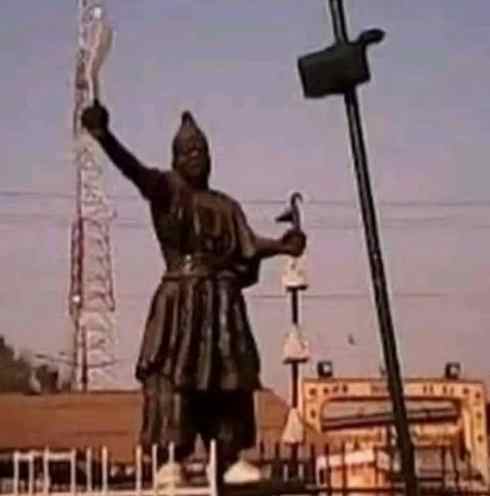
Beyond its royal heritage, Ila-Orangun is unique for its agricultural productivity, markets, and communal traditions. The town is famous for its large-scale palm wine tapping, a trade and cultural practice that has earned it recognition across Nigeria, this is why they say "Ila o ni oogun, emu ni ogun ila" (Ila people don't have charms, palm wine is their charms). Visitors to Ila-Orangun often find themselves marveled in its customs, from its unique greetings and language style to its festivals and traditional ceremonies.
Over the centuries, Ila-Orangun has stood as a center of political authority, cultural preservation, and economic activity. Its Oriki (praise poetry) shows the valor of its forebears, the beauty of its land, and the prestige of its royal bloodline.
Location and Geography
Ila-Orangun is situated in the north-central part of Osun State, bordered by towns such as Oke-Ila, Iragbiji, and Ikirun. The town lies on relatively elevated terrain, with fertile soil that supports farming activities year-round. Its strategic location historically provided both a defensive advantage and ease of trade with neighboring Yoruba kingdoms.
Cultural and Historical Significance
The Orangun of Ila is the traditional ruler and spiritual leader, occupying one of the most respected thrones in Yoruba land. The town is well-known for its annual cultural celebrations, including festivals that honor its founders, deities, and agricultural bounty. Its historical influence is also marked by its role in uniting neighboring towns during times of peace and conflict.
People and Occupations
Agriculture is the backbone of Ila-Orangun’s economy. The town is a major producer of palm wine, yams, maize, and cassava. Many residents are skilled palm wine tappers, traders, and artisans. Education and public service also employ a significant portion of the population, with the presence of schools and administrative offices adding to the town’s growth.
Unique Features of the Town
Ila-Orangun is home to royal palaces, sacred groves, bustling open-air markets, and palm wine farms. Its palm wine, in particular, has become a cultural signature, drawing visitors eager to taste it directly from the source.
Oriki Ilu Ila-Orangun
Below is the traditional Oriki (praise poetry) of Ila-Orangun.
Ila Orangun omo ogboye
Ila lade yin
Ẹfi owo rade
Ẹyin lomo ogboye gbola ilu eru
Kogbodo wo be iwofa e gbodo sun,
Iwofa toba sun laaro ti alebale ajagunla a lo n o
gberan amata agba ototo aguntan eri orangun,
Ẹ lo n gba awoka omo wiwo ni won muni sebo,
Eyin lomo ewure la nije lese gbagede
Aguntan la nije lese yara
Akuko ganga tiko lalede ila nijosi
Iyan la je lodo baba tiyin orangun
Omo ogboye ila lade yin
Ẹyin o kowo rade ri.
ara ila ekun o omo ekun
Omo ebo so ila le tente ila
letente ila dosupa o ila letente.
Tewe tewe ni mo yan ninu ile a ihoho nimo lo yan
akara omo agbara se meta gbala nijosi ikan ninu
gba iperin,
Ikan gbo kejigbo,
Ikan toku lo gba ile adejorin ni magbon,
Ibi ti eperin si le npe logbun iperin
Ibi e pagbo si le npe loke jigbo,
Ibi e pelede si leyin npe loke ede
Ibi a tete tedo si le npe ni isedo.
Edumare jowo bawa da ilu Ila Orangun
Amin, Ase
Conclusion
Ila-Orangun is more than just a historic Yoruba settlement; it is an account of centuries of royal tradition, agricultural excellence, and cultural pride.
Need more? Browse through our Oriki Gallery today, at zero cost.
Check out the detailed Oriki of Abeokuta, the capi…
The authentic Oriki of the Awori people, one of th…
CONNECT WITH US: