support@yorubalibrary.com
+2348073529208
When Yorùbá people were forcibly taken across the Atlantic during the transatlantic slave trade, they carried more than memory. They carried language, ritual systems, songs, and devotion to their Òrìṣà. Among the most popular of these spiritual forces was Èsù, the divine messenger and guardian of crossroads. In the Americas, he did not disappear. Instead, he took on new names, new ritual forms, and new cultural expressions.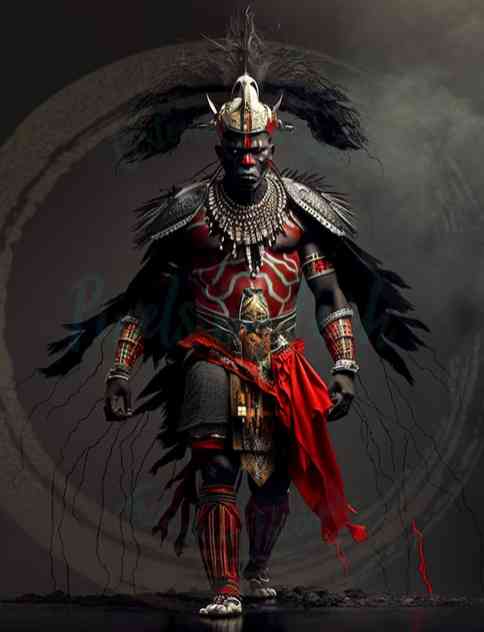 In Brazil, he became widely known as Exu. In Cuba, he is called Elegua (or Elegguá). Although these names differ in pronunciation and ritual context, they trace back to the same Yorùbá spiritual foundation. Over time, local history, Catholic influence, and social conditions shaped how he is understood and worshipped.
For scholars, practitioners, and cultural historians, comparing Exu and Elegua offers insight into how Yorùbá religion adapted without losing its core structure. It also reveals how misunderstanding and re-interpretation sometimes altered perceptions of this powerful Òrìṣà.
Èsù in Yorùbá Land: The Original Framework
Èsù in Yorùbá cosmology is the divine messenger, mediator of sacrifice, enforcer of consequence, and guardian of spiritual pathways. He ensures that offerings reach their intended Òrìṣà and that moral laws produce appropriate results.
He is neither purely benevolent nor malevolent. He represents balance, accountability, and the unpredictable element of life. Without him, ritual communication breaks down. His shrine may include laterite stone (Yangí), red palm oil, and colours such as black and red. This theological structure formed the foundation that traveled to the Americas.
Exu in Brazil
Exu developed within Afro-Brazilian religious traditions such as Candomblé and Umbanda.
1. Exu in Candomblé
In Candomblé, Exu closely resembles the Yorùbá Èsù (Elegbara). He remains the messenger and guardian of ritual order. Offerings are presented to him first. He governs crossroads and communication between humans and the divine. His colours often include red and black, and he receives items such as palm oil, alcoholic drinks, and specific ritual foods.
2. Exu in Umbanda
In Umbanda, however, Exu underwent additional transformation. He is sometimes associated with spiritual entities that operate closer to human moral struggles. Certain Umbanda traditions portray Exu in ways influenced by Catholic imagery of the devil. This shift resulted partly from colonial religious pressure and syncretism.
⚡ Wait...Do You Really Know the True Secrets of the Orishas?
Why was Sango called Jakuta before he was crowned Oba Koso? What hidden power lies in Ogun Onire’s original pact? And why is Obatala worshipped as the Apex Deity?
Stop guessing! True Orisha wisdom goes far beyond surface-level stories. Check out the secrets behind Sango, Ogun, Obatala, Osun, Esu, and Oro with our comprehensive e-book series. Inside each structured guide, you'll discover:
🎁The Masterclass e-Books Available at token! Claim Your Copy Today
Elegua in Cuba
Elegua is central to Cuban religious traditions such as Santería (also called Regla de Ocha).
1. Guardian of the Crossroads
Like Èsù, Elegua controls pathways, destiny, and opportunity. He opens and closes roads. No ceremony begins without first saluting him. This shows continuity with Yorùbá ritual protocol.
2. Catholic Syncretism
Under Spanish colonial rule, enslaved Africans masked their Òrìṣà behind Catholic saints. Elegua became associated with figures such as the Holy Child of Atocha or Saint Anthony in some traditions. This allowed practitioners to preserve devotion while avoiding persecution. Despite these outward associations, his internal theological role remained consistent with Yorùbá thought.
3. Childlike Representation
In Cuban practice, Elegua is sometimes represented with childlike characteristics. This emphasizes unpredictability and playfulness, aspects already present in Yorùbá narratives about Èsù’s testing nature.
Similarities Between Exu and Elegua
Across Brazil and Cuba, several core elements remain consistent:
• Guardian of crossroads
• First recipient of offerings
• Mediator between humans and higher divine forces
• Associated with red and black
• Enforcer of consequence
Key Differences
1. Degree of Syncretism
Brazilian Umbanda incorporates stronger spiritist and Catholic reinterpretations of Exu, sometimes blending him with moral dualism concepts. Cuban Santería maintains closer structural continuity to Yorùbá ritual hierarchy.
2. Visual Representation
Elegua in Cuba often appears as a small cement head placed behind doors or near entrances. In Brazil, Exu may be represented with more anthropomorphic statues in certain traditions.
3. Public Perception
In Brazil, Exu has sometimes been publicly mischaracterized due to association with devil imagery. In Cuba, while mis-understandings exist, Elegua is more clearly recognized as an Òrìṣà within Afro-Cuban religion.
🌿Unluck Natural Healing with Your Backyard Plants!
Ever wondered what secrets your local leafs and plants have for lifelong health? Do you know what they can cure? Stop relying solely on pills which are chemicals!
With years of experience, we’ve compiled authentic knowledge into 3 masterclass e-books:
The Impact of Colonial History
The transformation of Èsù into Exu and Elegua cannot be separated from slavery, persecution, and forced adaptation. Practitioners encoded their theology within new languages and symbols to survive. Despite these pressures, the essential role of the messenger and gatekeeper remained intact.
Reclaiming Theological Clarity
Modern scholarship increasingly separates Yorùbá Èsù from European concepts of the devil. Understanding Exu and Elegua through their African roots restores theological accuracy. They are not embodiments of evil. They are regulators of spiritual order and consequence. Their presence in Brazil and Cuba represents survival, not distortion alone.
Conclusion
Èsù’s journey from Yorùbá land to the Americas did not erase his identity. In Brazil as Exu and in Cuba as Elegua, he continues to guard crossroads, receive offerings first, and mediate spiritual communication.
CONNECT WITH US: