support@yorubalibrary.com
+2348073529208
In traditional Yoruba society, the farm is more than a place of labor. It is a place of honour—an extension of the spiritual world into the physical environment where life is sustained. The soil is not neutral ground; it is alive, responsive, and governed by forces that demand respect, discipline, and proper conduct. Among these forces is Orisha Oko, the guardian of cultivated land, fertility, and moral order.
Because of this status, farming is surrounded by rules that go beyond practical concerns. These rules regulate behavior, define roles, and establish boundaries. One of the most debated and often misunderstood aspects of these regulations is the restriction placed on women in certain farm rituals. To modern eyes, such restrictions may appear as simple exclusion or inequality. However, within the traditional context, they are part of a larger system of meaning that connects spirituality, biology, and social organization.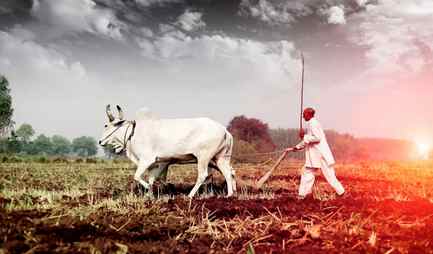 It is important to begin with clarity: these restrictions were not universal across all Yoruba communities, nor were they applied in the same way everywhere. In many cases, women played essential roles in agriculture—processing crops, participating in harvest, and contributing significantly to the economic life of the household. The restriction applied mainly to specific rituals, moments, or zones within the farming cycle, not to the entire process of farming itself.
To understand why such taboos existed, one must first understand how the Yoruba conceptualize power. Power is not treated as a single, uniform force. It exists in different forms—visible and invisible, controlled and unpredictable, structured and fluid. The farm, under the authority of Orisha Oko, represents a form of controlled power. It is a space where nature has been organized, where growth follows a disciplined pattern, and where outcomes depend on conformity with spiritual laws.
Within this system, anything perceived as unpredictable or difficult to regulate may be treated with caution. This is where gender roles enter the picture—not as a simplistic hierarchy, but as a way of managing different forms of power. In traditional belief, women are often associated with potent, and sometimes mysterious forms of energy, particularly linked to fertility, creation, and transformation. These qualities are respected, but they are also approached with caution in specific ritual contexts.
The restriction of women from certain farm rituals, therefore, can be seen as an attempt to maintain balance between different forms of power. The cultivated land requires stability, predictability, and order. Rituals performed on the farm are designed to reinforce these qualities. Any element perceived as introducing variability—whether physical, or spiritual—may be temporarily limited during these rites.
It is also necessary to consider the role of secrecy and sacred knowledge. Some farm rituals involve chants, gestures, and practices that are not meant for general exposure. Restricting access to these rituals helps preserve their integrity and prevents misuse. In some cases, these restrictions were gender-based, not because of inherent limitation, but because of how knowledge was structured and transmitted within the society.
⚡ Wait...Do You Really Know the True Secrets of the Orishas?
Why was Sango called Jakuta before he was crowned Oba Koso? What hidden power lies in Ogun Onire’s original pact? And why is Obatala worshipped as the Apex Deity?
Stop guessing! True Orisha wisdom goes far beyond surface-level stories. Check out the secrets behind Sango, Ogun, Obatala, Osun, Esu, and Oro with our comprehensive e-book series. Inside each structured guide, you'll discover:
🎁The Masterclass e-Books Available at token! Claim Your Copy Today
The Farm as a Controlled Space
The farm, under the influence of Orisha Oko, is not just land—it is a regulated environment. It represents order imposed on nature, where growth is guided rather than left to chance.
Rituals performed on the farm are designed to maintain this order. They often involve specific timings, gestures, and conditions that must be followed precisely. Any deviation is believed to disrupt the balance, potentially affecting the outcome of the harvest.
Within this context, restrictions are not arbitrary. They are part of a system that seeks to control variables and ensure consistency. The farm becomes a space where discipline is enforced, and where every action carries significance.
Gendered Power and Spiritual Interpretation
In Yoruba thought, gender is not only a social category but also a spiritual one. Men and women are associated with different forms of energy, each with its own strengths and implications.
Women are often linked to creative power—the ability to give life, to transform, and to influence unseen forces. This power is highly respected, but it is also considered potent and sometimes unpredictable in certain ritual settings.
On the farm, where the goal is to maintain steady and controlled growth, this perceived unpredictability is managed through restriction. The intention is not to diminish the role of women, but to create a specific environment where certain types of energy are emphasized over others.
Ritual Purity and the Logic of Restriction
The concept of purity in this context is symbolic rather than moral. It refers to a state of conformity with the requirements of a ritual. Certain farm rituals require conditions that are stable and uninterrupted. Biological processes such as menstruation, which involve natural cycles of change, were interpreted as periods where this stability might be affected. As a result, temporary restrictions were applied.
It is important to note that this interpretation shows a cultural framework rather than a universal truth. Modern perspectives may view these processes differently, but within the traditional system, they were part of a larger logic of maintaining balance.
Division of Roles and Complementary Responsibilities
While restrictions existed in certain areas, women were far from excluded from agricultural life. They played crucial roles in harvesting, processing, storage, and distribution of farm produce.
In many cases, women also held significant economic power through market activities. Their influence extended beyond the farm into the broader structure of society.
🌿Unluck Natural Healing with Your Backyard Plants!
Ever wondered what secrets your local leafs and plants have for lifelong health? Do you know what they can cure? Stop relying solely on pills which are chemicals!
With years of experience, we’ve compiled authentic knowledge into 3 masterclass e-books:
Secrecy, Knowledge, and Ritual Authority
Some farm rituals involve knowledge that is considered sacred and restricted. Access to this knowledge is often controlled to preserve its effectiveness and prevent misuse.
Gender-based restrictions can be part of this system of control. By limiting who can participate, the society ensures that the knowledge remains within a defined group. This approach is not unique to farm rituals. It appears in various aspects of Yoruba spirituality, where initiation and access are carefully managed.
Modern Perspectives and Reinterpretation
In contemporary society, many of these taboos are being re-examined. Increased access to education, changing social norms, and evolving interpretations of tradition have led to new perspectives on gender roles.
Some communities maintain the traditional restrictions, viewing them as essential to cultural identity. Others have adapted or removed them, emphasizing inclusivity and equality.
Conclusion:
The restriction of women in certain farm rituals within Yoruba tradition is a complex issue that cannot be reduced to a single explanation. It is shaped by spiritual beliefs, cultural values, social structures, and unique interpretations.
CONNECT WITH US: