support@yorubalibrary.com
+2348073529208
Across Yorubaland, rivers are not merely geographical features that carry water across the land. Each major river is associated with a divine personality, a history, and a network of stories that explain both the physical landscape and the moral lessons in Yoruba tradition. Among these rivers, two rivers frequently discussed together are the river Ọ̀ṣun and River Ọba.
These two rivers eventually meet within the river system of southwestern Nigeria, forming a confluence that has both geographical and historic relevance. For many observers, this meeting point represents more than a natural event in the flow of water.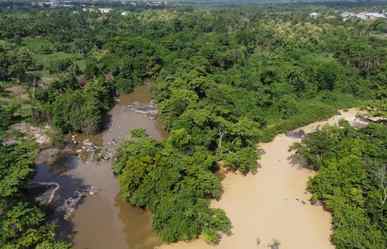 Yoruba storytelling frequently connects physical landscapes with the actions and personalities of the Òrìṣà. Mountains, rivers, forests, and valleys are often described as places where divine events occurred or where spiritual transformations took place. In this way, geography becomes a form of cultural memory. The land itself appears to preserve the stories of the past.
The narrative of Ọ̀ṣun and Ọba as rival wives of Ṣàngó is one of the most widely known stories explaining the meaning of their rivers. According to oral tradition, the rivalry between the two deities led to events that shaped their emotional relationship and ultimately influenced how their rivers behave in nature. The famous story in which Ọba cut part of her ear after being deceived by Ọ̀ṣun shows a dramatic turning point in their relationship. After the humiliation and pain that followed, Ọba withdrew in sorrow, and the story explains that she later became associated with a river that carries her name.
The Course of the Osun River
The river associated with Ọ̀ṣun flows across several regions of southwestern Nigeria, passing through forests, agricultural land, and towns that rely on its waters for daily life. Its calm movement and dependable flow have made it one of the most important rivers in the area.
Communities along the river have long regarded it as a source of both physical and spiritual nourishment. Rituals, prayers, and seasonal ceremonies often take place at its banks. Devotees believe that the river comprises of the presence of the goddess, making it a sacred space for communication with the divine.
⚡ Wait...Do You Really Know the True Secrets of the Orishas?
Why was Sango called Jakuta before he was crowned Oba Koso? What hidden power lies in Ogun Onire’s original pact? And why is Obatala worshipped as the Apex Deity?
Stop guessing! True Orisha wisdom goes far beyond surface-level stories. Check out the secrets behind Sango, Ogun, Obatala, Osun, Esu, and Oro with our comprehensive e-book series. Inside each structured guide, you'll discover:
🎁The Masterclass e-Books Available at token! Claim Your Copy Today
The River of Ọba
The river connected to Ọba flows through other parts of Yorubaland before joining larger waterways. Although smaller than the Osun River, it has its own place within Yoruba spiritual interpretation.
In oral storytelling, the character of this river shows the emotional story associated with the deity. The currents are sometimes described as representing determination, and the enduring strength of a figure who experienced betrayal yet continued to exist with dignity.
The Meeting of the Rivers
At certain points within the broader river network of southwestern Nigeria, tributaries and channels merge. Among these connections is the confluence where the waters associated with Ọ̀ṣun and Ọba eventually meet.
Geographically, river confluences occur when one river flows into another, combining their waters into a single channel. These locations often become ecologically rich zones that support wildlife and agriculture.
🌿Unluck Natural Healing with Your Backyard Plants!
Ever wondered what secrets your local leafs and plants have for lifelong health? Do you know what they can cure? Stop relying solely on pills which are chemicals!
With years of experience, we’ve compiled authentic knowledge into 3 masterclass e-books:
Interpretation of the Confluence
Within Yoruba storytelling, natural landscapes often mirror human emotions and social relationships. The confluence of the rivers therefore becomes a powerful metaphor for reconciliation, remembrance, or continued rivalry depending on how the story is told.
Some storytellers suggest that the meeting of the rivers shows the eventual calming of hostility between the two rivals. Others interpret it as a reminder that actions driven by jealousy can leave lasting consequences.
Conclusion
The meeting of the rivers associated with Ọ̀ṣun and Ọba represents an intriguing combination of geography, mythology, and cultural interpretation. While the confluence is a natural result of river systems flowing across southwestern Nigeria, Yoruba tradition gives this landscape a great narrative meaning.
CONNECT WITH US: