support@yorubalibrary.com
+2348073529208
One Yoruba proverb says, "Onisango ti o jo, ti ko mi Yeri, abuku ara re lo ta". Sango’s choice to wear a skirt, known as a yeri, instead of trousers is based cultural epic. The skirt represents tradition and identity, showing the attire commonly worn by women in certain communities, especially among traditional healers and spiritual figures. It carries meaning beyond mere fashion, connected to heritage and social roles.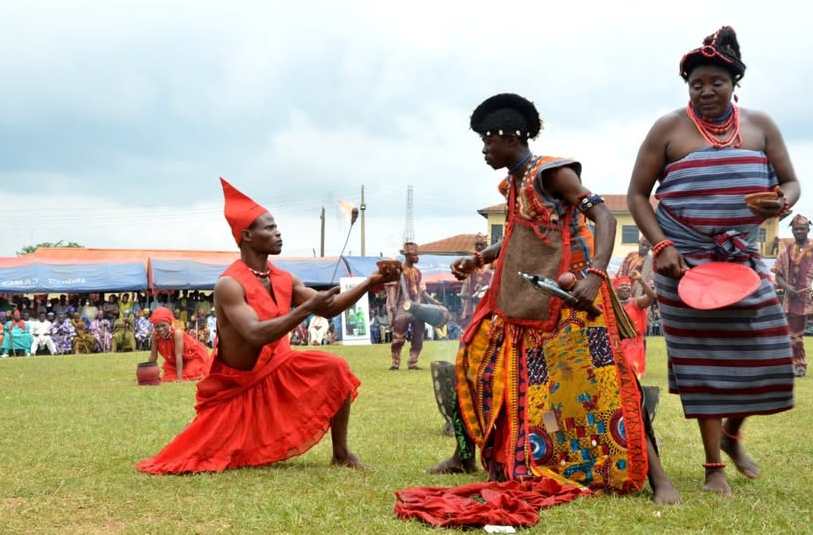 The skirt allows Sango to honor these cultural values while maintaining a distinctive appearance that aligns with his background and status. Unlike trousers, the skirt’s design offers both practicality and a visual connection to the past, emphasizing continuity with customs. This choice also highlights how clothing in historical and cultural contexts can convey meaning about identity and function. For Sango, wearing the yeri is not simply about comfort or style; it is a deliberate expression of cultural integrity and respect for tradition.
Signature Costume Elements
Sango’s costume is centered on a combination of traditional and functional attire. He typically wears a white kimono top paired with a red hakama skirt, a classic shrine maiden style adapted for mobility. Over this, he adds armor pieces that protect him during battle, such as shoulder guards and gauntlets. His hair is long and black, tied back with a white ribbon, emphasizing both his femininity and practicality. The layered skirt is a defining feature, allowing ease of movement while maintaining a traditional aesthetic. Additional accessories like gloves and a leather belt complete the look, balancing utility with culture.
Role of Color Choices
Color plays a significant role in representing Sango’s character. The predominant white in his upper wear symbolizes purity and spiritual strength, a key aspect of his shrine maiden roots. The red of his hakama skirt is traditionally linked to protection and warding off evil, underscoring his role as a demon slayer.
Accents of green or dark hues appear in her outfit’s layers or armor, adding contrast and a grounded feel to the design. This mix reinforces his dual identity as both a spiritual figure and a warrior. The thoughtful use of color enhances the visual storytelling of his heritage.
⚡ Wait...Do You Really Know the True Secrets of the Orishas?
Why was Sango called Jakuta before he was crowned Oba Koso? What hidden power lies in Ogun Onire’s original pact? And why is Obatala worshipped as the Apex Deity?
Stop guessing! True Orisha wisdom goes far beyond surface-level stories. Check out the secrets behind Sango, Ogun, Obatala, Osun, Esu, and Oro with our comprehensive e-book series. Inside each structured guide, you'll discover:
🎁The Masterclass e-Books Available at token! Claim Your Copy Today
Analysis of Sango’s "Skirt" (Yeri) Choice
Sango’s decision to wear a skirt instead of trousers shows layered meanings tied to symbolism, cultural context, and his character's identity. The skirt functions beyond mere clothing; it conveys status, heritage, and personal expression. The skirt, or yeri, depicts more than functionality. In many African cultures, specific fabrics and garment styles represent power, lineage, and social roles. For example, a skirt or shawl made from animal hides—such as lion skin—suggests strength and respect.
Though Sango’s skirt is not made from animal hides, its wrap-around style with layered design nods to traditional warrior attire. This choice symbolizes his combat readiness combined with femininity. The layered skirts convey protection and honor, linking his to ancestral legacies of power and resilience.
In Yoruba culture, skirts hold specific social and ceremonial roles. The yeri is traditionally worn by women, differentiating gender roles in dress. Sango’s skirt shows this cultural norm, aligning him with the heritage of Yoruba women. Additionally, skirts allow ease of movement essential for rituals and combat, aligning with his role as a demon slayer and village protector. This practical aspect underscores the cultural adaptation of garments to lifestyle needs, emphasizing respect for both tradition and function.
Functional Reasons for Wearing a Skirt Instead of Trousers
Wearing a skirt provides specific advantages that address practical needs during combat and offer enhanced freedom of movement. These benefits contribute directly to the wearer’s efficiency and comfort in demanding situations. Additionally, skirts can incorporate hidden pockets or slits, enabling discreet storage of small items. This practical detail supports readiness without sacrificing mobility or comfort.
🌿Unluck Natural Healing with Your Backyard Plants!
Ever wondered what secrets your local leafs and plants have for lifelong health? Do you know what they can cure? Stop relying solely on pills which are chemicals!
With years of experience, we’ve compiled authentic knowledge into 3 masterclass e-books:
CONCLUSION
While trousers may be associated with uniformed looks or activewear, the skirt conveys a sense of traditional or formal inspiration. This difference highlights Sango’s role and persona, showing his preference or status without sacrificing mobility entirely. The skirt’s distinct design cues make him stand out in group settings, providing a clear visual contrast to those in trousers.
CONNECT WITH US: