support@yorubalibrary.com
+2348073529208
Ewe Lẹfun Losun, known in English as Caladium and botanically as Caladium bicolor Vent., is a highly regarded plant in Yoruba traditional medicine and spiritual practices. The name “Lẹfun Losun” shows its distinctive beauty and sacred spiritual value.
While this plant is not edible, it is mostly used for spiritual protection, curse-breaking, and fortification, and in some cases, it is applied externally in traditional medicine for skin-related problems and wound healing. Its colorful and striking leaves make it easily recognizable and often associated with mystical and protective powers in Yoruba belief.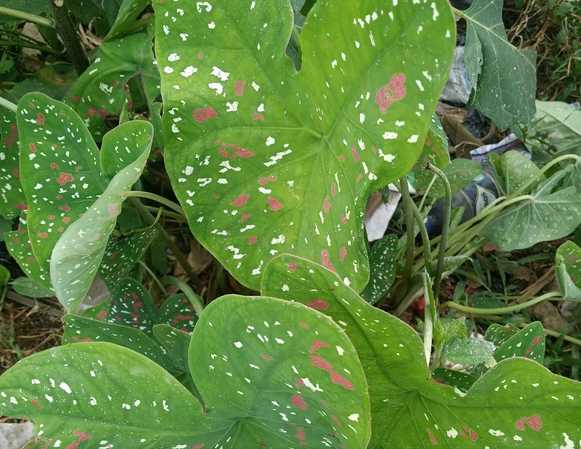
Key Facts
Category: Leaf
Botanical Name: Caladium Bicolor Vent
Common Name: Caladium
Yoruba name: Ewe Lẹfun Losun
Igbo Name: Nil
Hausa Name: Nil
Health Benefits
1. Heals Skin Infections and Rashes
Poultices from the leaf are applied to boils, rashes, and skin irritations for quick relief.
2. Speeds Wound Healing
When crushed and applied correctly, it helps in the fast recovery of cuts and minor wounds.
3. Relieves Swelling and Rheumatic Pains
Some herbalists use Ewe Lẹfun Losun poultices for swollen joints and rheumatic pains.
4. External Detoxification
The plant is sometimes used in herbal washes to draw out harmful toxins from the skin surface.
(Note: Ewe Lẹfun Losun is generally not taken internally due to its possible toxic effects if misused).
🌿Unluck Natural Healing with Your Backyard Plants!
Ever wondered what secrets your local leafs and plants have for lifelong health? Do you know what they can cure? Stop relying solely on pills which are chemicals!
With years of experience, we’ve compiled authentic knowledge into 3 masterclass e-books:
Spiritual Use
1. Powerful Protection Against Witchcraft and Evil Attacks
Ewe Lẹfun Losun is highly respected for neutralizing witchcraft, spiritual arrows, and evil eyes.
2. Breaking Curses and Removing Stubborn Spiritual Bondage
It is combined with other potent herbs in rituals to break generational curses and spiritual chains.
3. Fortification for Hunters, Warriors, and Travelers
The leaf is included in protective charms to make hunters and travelers spiritually strong and fearless.
4. Cleansing Bad Luck and Negative Energy
Herbal baths prepared with this leaf are used to wash away bad luck, envy, and negative vibrations.
5. Attracting Blessings and Spiritual Elevation
In some traditional rites, Ewe Lẹfun Losun is believed to open doors of favor and elevate spiritual authority when properly consecrated.
Characteristics
⦁ Physical Appearance –
Ewe Lẹfun Losun has large, heart-shaped leaves with striking variegated patterns in green, white, pink, or red, making it one of the most colorful medicinal plants in Yoruba land.
⦁ Taste and Smell –
Rarely tasted due to its non-edible nature; has a mild herbal smell when crushed.
⦁ Growth Pattern –
It thrives in moist soils, shaded gardens, and forest edges, and is also cultivated as an ornamental plant.
⚡ Wait...Do You Really Know the True Secrets of the Orishas?
Why was Sango called Jakuta before he was crowned Oba Koso? What hidden power lies in Ogun Onire’s original pact? And why is Obatala worshipped as the Apex Deity?
Stop guessing! True Orisha wisdom goes far beyond surface-level stories. Check out the secrets behind Sango, Ogun, Obatala, Osun, Esu, and Oro with our comprehensive e-book series. Inside each structured guide, you'll discover:
🎁The Masterclass e-Books Available at token! Claim Your Copy Today
Functions
⦁ Traditional Medicine –
Skin healing, wound treatment, and swelling relief.
⦁ Spiritual Protection –
Strong defense against witchcraft and evil attacks.
⦁ Cleansing and Fortification –
Used in baths and charms for protection, success, and favor.
Conclusion
Ewe Lẹfun Losun, the Yoruba Caladium (Caladium bicolor Vent.), is a mystically powerful and medicinal plant. While it is mainly used externally for skin problems and wound healing, it is best known for its spiritual uses in protection, curse-breaking, and fortification against witchcraft.
CONNECT WITH US: