support@yorubalibrary.com
+2348073529208
Eso Ọpọtọ, known botanically as Ficus capensis, is a popular Yoruba medicinal fruit. The fruit and sometimes the bark are used in traditional medicine for treating digestive problems, boosting blood health, and improving fertility.
In Yoruba spiritual practice, Eso Ọpọtọ is associated with fruitfulness, peace, and protection. It is often used in rituals for cleansing, attracting blessings, and seeking ancestral favor.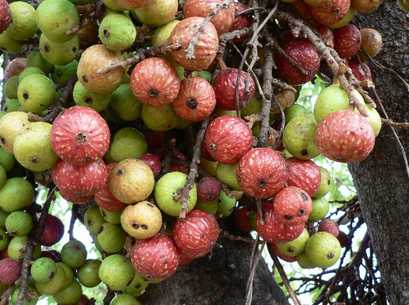
Key Facts
Category: Fruit
Botanical Name: Ficus Capensis
Common Name: Nil
Yoruba name: Eso Ọpọtọ
Igbo Name: Nil
Hausa Name: Nil
Health Benefits
1. Improves Digestion and Treats Constipation
The fruit is rich in natural fiber, helping to improve digestion, ease constipation, and cleanse the bowel.
2. Boosts Blood Formation and Fights Anemia
Regular consumption improves red blood cell production and overall blood circulation.
3. Strengthens the Immune System
Packed with antioxidants and vitamins, Eso Ọpọtọ boosts immunity and protects the body against infections.
4. Manages Hypertension and Supports Heart Health
The fruit helps regulate blood pressure and improve cardiovascular health.
5. Enhances Fertility and Reproductive Health
Yoruba women use it in herbal mixtures to boost fertility and strengthen the womb.
6. Improves Bone and Joint Health
Its mineral content supports bone strength and eases joint pains.
7. Postpartum Recovery and General Strength
It is included in herbal preparations to restore energy and purify the body after childbirth.
🌿Unluck Natural Healing with Your Backyard Plants!
Ever wondered what secrets your local leafs and plants have for lifelong health? Do you know what they can cure? Stop relying solely on pills which are chemicals!
With years of experience, we’ve compiled authentic knowledge into 3 masterclass e-books:
Spiritual Use
1. Fertility and Fruitfulness Rituals
Because of its many seeds, Eso Ọpọtọ symbolizes fruitfulness and abundance, and is used in rituals for fertility.
2. Attracting Blessings and Prosperity
Placed on family altars or used in spiritual offerings to draw wealth, favor, and good fortune.
3. Cleansing Bad Luck and Negative Energy
Its water-infused preparation is used in baths to remove bad luck and clear spiritual blockages.
4. Peace and Family Unity
Used in Yoruba traditions to restore harmony and love within homes.
5. Ancestral and Orisa Offerings
Commonly offered to orisa and ancestors to seek healing, protection, and blessings.
Characteristics
⦁ Physical Appearance –
Eso Ọpọtọ is a fig-like fruit with green to yellowish skin and soft sweet pulp filled with small seeds.
⦁ Taste and Smell –
Sweet with a slightly tangy flavor and fruity aroma.
⦁ Growth Pattern –
Grows on large fig trees (Ficus capensis) commonly found in forests, riverbanks, and farmlands.
⚡ Wait...Do You Really Know the True Secrets of the Orishas?
Why was Sango called Jakuta before he was crowned Oba Koso? What hidden power lies in Ogun Onire’s original pact? And why is Obatala worshipped as the Apex Deity?
Stop guessing! True Orisha wisdom goes far beyond surface-level stories. Check out the secrets behind Sango, Ogun, Obatala, Osun, Esu, and Oro with our comprehensive e-book series. Inside each structured guide, you'll discover:
🎁The Masterclass e-Books Available at token! Claim Your Copy Today
Functions
⦁ Traditional Medicine –
Improves digestion, fertility, blood health, and strengthens immunity.
⦁ Spiritual Uses –
Fertility rituals, cleansing bad luck, and attracting blessings.
⦁ Cultural Significance –
Highly regarded in Yoruba tradition as a symbol of fruitfulness and abundance.
Conclusion
Eso Ọpọtọ (Ficus capensis) is a Yoruba medicinal and spiritual fruit used to improve digestion, boost fertility, enrich blood, and strengthen immunity.
CONNECT WITH US: