support@yorubalibrary.com
+2348073529208
Ajeobale, known scientifically as Croton zambesicus, is a widely known plant in Yoruba traditional medicine. Commonly found in the savannas and forested regions of West Africa especially Nigeria, this plant is unique for its multi-function applications in promoting health and spiritual protection. In Yoruba communities, Ajeobale is often planted around homes, believed to serve as a shield against negative spiritual influences. Beyond its spiritual significance, Ajeobale is utilized for its medicinal properties. 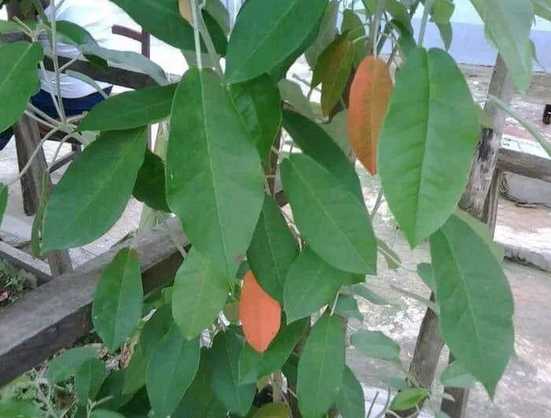
Traditional healers use various parts of the plant to address ailments such as hypertension, dysentery, fever, and convulsions. Its leaves, in particular, are used to prepare decoctions and topical applications aimed at treating infections and promoting overall well-being.
Key Facts
Category: Leaf
Botanical Name: Croton zambesicus
Common Name: Nil
Yoruba name: Ewe Ajeobale
Igbo Name: Nil
Hausa Name: Nil
Characteristics of Ajeobale
• Growth Habit:
Ajeobale is a shrub or small tree that can grow up to 16 meters in height. It thrives in savanna and forest regions, particularly in West Africa.
• Leaves:
The leaves are simple, alternate, and have a distinctive aroma when crushed.
• Bark:
The bark emits an aromatic scent when slashed, and infusions made from it are traditionally used in treating malaria.
• Flowers:
The plant produces small, inconspicuous flowers.
🌿Unluck Natural Healing with Your Backyard Plants!
Ever wondered what secrets your local leafs and plants have for lifelong health? Do you know what they can cure? Stop relying solely on pills which are chemicals!
With years of experience, we’ve compiled authentic knowledge into 3 masterclass e-books:
Traditional and Medicinal Uses in Yoruba Land
1. Spiritual Protection
Ajeobale is traditionally planted around homes to ward off negative spiritual influences and is used in rituals aimed at protection and cleansing.
2. Treatment of Hypertension
Decoctions made from the leaves are consumed to help manage high blood pressure.
3. Management of Dysentery
Leaf decoctions are taken internally or used as washes to treat dysentery and related gastrointestinal issues.
4. Fever and Convulsions
Infusions prepared from the plant are used in managing fevers and convulsions, especially in traditional settings.
5. Antimicrobial Applications
Studies have shown that extracts from Croton zambesicus possess antimicrobial properties effective against certain bacterial strains.
Healing Properties of Ajeobale
• Antimicrobial: Effective against certain bacteria, aiding in the treatment of infections.
• Antihypertensive: Helps in managing high blood pressure.
• Antipyretic: Used in reducing fevers.
• Anticonvulsant: Traditionally employed in managing convulsions.
• Spiritual Cleansing: Used in rituals for protection and cleansing.
⚡ Wait...Do You Really Know the True Secrets of the Orishas?
Why was Sango called Jakuta before he was crowned Oba Koso? What hidden power lies in Ogun Onire’s original pact? And why is Obatala worshipped as the Apex Deity?
Stop guessing! True Orisha wisdom goes far beyond surface-level stories. Check out the secrets behind Sango, Ogun, Obatala, Osun, Esu, and Oro with our comprehensive e-book series. Inside each structured guide, you'll discover:
🎁The Masterclass e-Books Available at token! Claim Your Copy Today
Conclusion
Ewe Ajeobale (Croton zambesicus) has a prominent place in Yoruba traditional medicine, valued for both its spiritual significance and medicinal properties. From serving as a protective plant around homes to its applications in treating various ailments and many more.
CONNECT WITH US: