support@yorubalibrary.com
+2348073529208
One of the powerful plants in Yoruba Land is Ewe Jenjokoo, known botanically as Cissampelos owariensis. This plant plays an important role in the treatment of numerous ailments and is often part of herbal remedies used alongside many other herbs.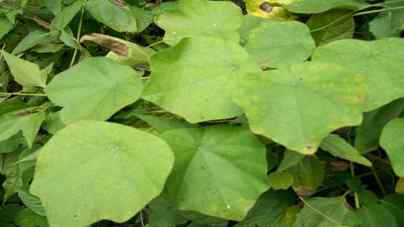
Ewe Jenjokoo is a climbing plant that thrives in tropical environments, particularly in bush paths, farmlands, and forest edges. Its leaves and roots are frequently utilized by Yoruba herbalists to address various internal and external health conditions. It is known for its potency in treating infections, purifying the blood, and restoring balance to the body, making it a staple in traditional Yoruba healing.
Key Facts
Category: Leaf
Botanical Name: Cissampelos owariensis
Common Name: West African Spiked Vine
Yoruba name: Ewe Jenjoko
Igbo Name: Nil
Hausa Name: Nil
Characteristics of Jenjokoo
• Growth Habit:
A perennial climbing vine that can cover shrubs and small trees.
• Leaves:
Broad, heart-shaped leaves with fine hairs on the underside.
• Flowers:
Small, greenish flowers that are often overlooked but crucial for reproduction.
• Habitat:
Common in the savannah, forest margins, and disturbed lands across West Africa.
Traditional Uses in Yoruba Medicine
1. Fertility and Reproductive Health
Jenjokoo is popular among traditional Yoruba healers for supporting fertility in both men and women. It is commonly used to regulate ovulation, cleanse the uterus, and improve sperm quality.
2. Treatment of Venereal Diseases
Decoctions made from the roots and leaves are used in the treatment of sexually transmitted infections and other genital-related health issues.
3. Pain Relief and Anti-inflammatory Uses
When boiled and applied or consumed, Jenjokoo can relieve pains from rheumatism, arthritis, and general body aches.
4. Malaria and Fever Management
The plant is often incorporated into herbal concoctions for treating malaria symptoms and reducing high fever.
5. Blood Purification
Jenjokoo is a common ingredient in herbal tonics designed to detoxify the body, purify the blood, and boost overall wellness.
🌿Unluck Natural Healing with Your Backyard Plants!
Ever wondered what secrets your local leafs and plants have for lifelong health? Do you know what they can cure? Stop relying solely on pills which are chemicals!
With years of experience, we’ve compiled authentic knowledge into 3 masterclass e-books:
Healing Properties of Jenjokoo
• Anti-microbial:
Fights off infections caused by bacteria and other pathogens.
• Anti-inflammatory:
Helps reduce swelling and pain associated with internal and external inflammations.
• Detoxifying:
Cleanses the blood and vital organs, especially the liver and kidneys.
• Fertility-boosting:
Enhances reproductive functions in both genders.
• Febrifuge:
Reduces fever and manages symptoms associated with malaria and flu.
Functions in Yoruba Traditional Medicine
• Used in herbal baths and spiritual cleansing rituals.
• Forms part of postpartum herbal care to support female recovery.
⚡ Wait...Do You Really Know the True Secrets of the Orishas?
Why was Sango called Jakuta before he was crowned Oba Koso? What hidden power lies in Ogun Onire’s original pact? And why is Obatala worshipped as the Apex Deity?
Stop guessing! True Orisha wisdom goes far beyond surface-level stories. Check out the secrets behind Sango, Ogun, Obatala, Osun, Esu, and Oro with our comprehensive e-book series. Inside each structured guide, you'll discover:
🎁The Masterclass e-Books Available at token! Claim Your Copy Today
• Included in treatments for impotence and infertility.
• Combined with other herbs in multi-functional concoctions for chronic conditions.
• Used to expel worms and cleanse the digestive tract.
Conclusion
Jenjokoo (Cissampelos owariensis) stands out as one of the indispensable medicinal plants in Yoruba traditional healing due to its broad spectrum of uses and effective healing properties.
CONNECT WITH US: