support@yorubalibrary.com
+2348073529208
Ewe Awoyọyọ (as called Ewe Inabo), known in English as Slender Carpetweed and botanically as Glinus oppositifolius, is a popular medicinal plant in Yoruba traditional medicine.
This plant is mostly used for cleansing the blood, treating fever, boosting fertility, and spiritual cleansing. It is considered a cooling herb, often given to people recovering from illness to restore strength and improve overall body health.
Ewe Awoyọyọ grows naturally in farmlands, bushy areas, and near rivers, forming a carpet-like spread on the ground, which is why it is called Slender Carpetweed in English.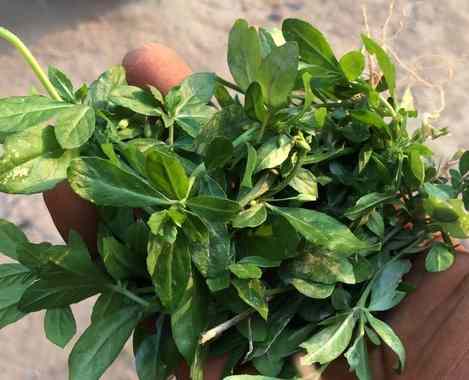
Key Facts
Category: Leaf
Botanical Name: Slender Carpetweed
Common Name: Glinus Oppositifolius
Yoruba name: Ewe Awoyọyọ (or Ewe Inabo)
Igbo Name: Nil
Hausa Name: Nil
Health Benefits
1. Cleanses the Blood and Detoxifies the Body
Ewe Awoyọyọ (Glinus oppositifolius) is boiled and taken as herbal tea to purify the blood, remove toxins, and improve overall health.
2. Fever and Malaria Treatment
The herbal drink made from Awoyọyọ leaves helps reduce fever, malaria symptoms, and excessive body heat.
3. Boosts Fertility and Reproductive Health
Yoruba herbalists use Awoyọyọ in herbal mixtures for improving fertility in women and boosting reproductive health in men.
4. Restores Strength After Childbirth or Sickness
The plant is used in herbal tonics for women after childbirth and for sick patients to regain lost energy.
5. Treats Stomach Disorders and Indigestion
Mild herbal drinks made from Awoyọyọ are taken to relieve stomach cramps, bloating, and improve digestion.
6. Improves Appetite and General Wellness
Its mild herbal tea is believed to stimulate appetite and promote general body wellness.
7. Reduces Inflammation and Rheumatism Pain
Poultices made from Awoyọyọ leaves are applied to swollen joints to relieve arthritis and body pain.
🌿Unluck Natural Healing with Your Backyard Plants!
Ever wondered what secrets your local leafs and plants have for lifelong health? Do you know what they can cure? Stop relying solely on pills which are chemicals!
With years of experience, we’ve compiled authentic knowledge into 3 masterclass e-books:
Spiritual Use
1. Cleansing Bad Luck and Negative Energy
Ewe Awoyọyọ is soaked in water overnight and used as a spiritual bath to remove bad luck, negative energy, and spiritual blockages.
2. Attracting Peace and Good Fortune
Yoruba elders believe that bathing with Awoyọyọ herbal water regularly brings peace, favor, and good fortune.
3. Healing Spiritually Related Illnesses
When sickness is believed to be spiritually caused, herbalists add Awoyọyọ to cleansing baths and herbal drinks.
4. Protection Against Evil Attacks
Some Yoruba traditionalists place Awoyọyọ leaves at doorways or mix them in protective charms to ward off evil spirits.
5. Restoring Harmony in Relationships
The plant is sometimes used in rituals meant to settle disputes and restore peace among family members.
Characteristics
⦁ Physical Appearance –
Ewe Awoyọyọ has small, smooth green leaves that spread flat on the ground like a carpet.
⦁ Taste and Smell –
It has a mild herbal taste and a slightly earthy smell.
⦁ Growth Pattern –
Grows widely in farmlands, bushy areas, and riverbanks, spreading close to the ground.
⚡ Wait...Do You Really Know the True Secrets of the Orishas?
Why was Sango called Jakuta before he was crowned Oba Koso? What hidden power lies in Ogun Onire’s original pact? And why is Obatala worshipped as the Apex Deity?
Stop guessing! True Orisha wisdom goes far beyond surface-level stories. Check out the secrets behind Sango, Ogun, Obatala, Osun, Esu, and Oro with our comprehensive e-book series. Inside each structured guide, you'll discover:
🎁The Masterclass e-Books Available at token! Claim Your Copy Today
Functions
⦁ Traditional Medicine –
Used for fever, blood purification, fertility improvement, and body restoration.
⦁ Spiritual Cleansing –
Removes bad luck, attracts peace, and provides protection.
⦁ Pain Relief –
Applied externally for swollen joints and rheumatism.
Conclusion
Ewe Awoyọyọ, the Yoruba Slender Carpetweed (Glinus oppositifolius), is a highly valued herbal plant for blood cleansing, fever treatment, fertility improvement, and spiritual cleansing.
CONNECT WITH US: