support@yorubalibrary.com
+2348073529208
Ewe Awede, known in English as Rock Rose, is a common medicinal plant found across many parts of Yoruba land. It grows naturally in open fields and along bush paths, with distinctive purple or pink flowers that make it easily recognizable. Yoruba traditional healers have long considered this plant a “cooling leaf,” suitable for treating both internal and external ailments associated with heat, inflammation, and infection.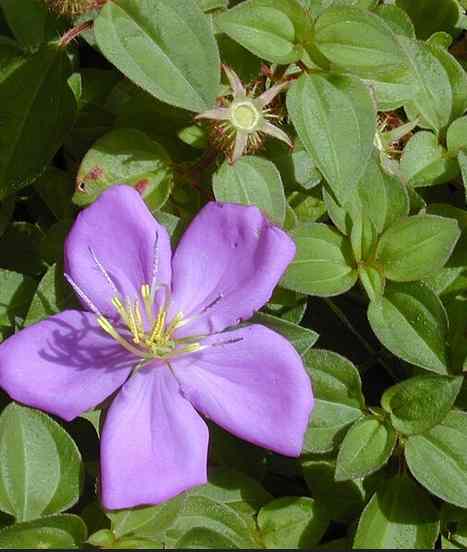 From generation to generation, Ewe Awede has been valued not only for its healing power but also for its multiple uses. Both the leaves and roots are used in decoctions (Agbo), infusions, and poultices. Its medicinal applications cut across oral care, skin management, respiratory health, and general body wellness.
The leaf’s cooling and anti-inflammatory nature make it one of the first remedies sought when dealing with infections, sores, or wounds. It is also well-respected for restoring strength and reducing feverish conditions, especially in children and the elderly.
Key Facts
Category: Leaf
Botanical Name: rotundifolia (or Dissotis Rotundifolia)
Common Name: Rock rose
Yoruba name: Ewe Awede
Igbo Name: Nil
Hausa Name: Nil
Characteristics of Ewe Awede
1) It is a perennial herb with a woody base and multiple spreading branches.
2) The leaves are round or oval-shaped, with fine hairs and visible veins.
3) The flowers are purple to pink with five petals, often blooming in clusters.
4) When crushed, the leaves release a slightly earthy scent, typical of cooling herbs.
5) It grows easily in moist, sunny areas and can adapt to different soil types.
🌿Unluck Natural Healing with Your Backyard Plants!
Ever wondered what secrets your local leafs and plants have for lifelong health? Do you know what they can cure? Stop relying solely on pills which are chemicals!
With years of experience, we’ve compiled authentic knowledge into 3 masterclass e-books:
Identification Features
• Low-growing shrub reaching about 30–60 cm in height.
• Bright green leaves with rough surfaces and soft hair.
• Purple or pink flowers that attract bees and butterflies.
• When plucked, the stems exude a mild sap that can be used in topical preparations.
Uses of Ewe Awede
Find below some of the uses of Ewe Awede in Yoruba trado-medicine practice:
1. Mouth Ulcers and Gum Inflammation
A small amount of cooled Ewe Awede decoction is used as a gentle mouth rinse several times daily. The wash soothes ulcerative surfaces, reduces bacterial load, and eases pain enough to improve feeding and speech. In traditional practice, the rinse is combined with salt water or other cooling leaves for added effect.
2. Wound Cleansing and Healing
Fresh leaves of Ewe Awede are crushed and applied directly to wounds to stop bleeding and prevent infection. The plant’s natural antiseptic property helps the wound heal faster, while its cooling effect reduces inflammation and swelling. In some cases, the extract is mixed with shea butter for better absorption and longer relief.
3. Skin Rashes and Eczema
The leaf decoction is used as a body wash or sponge bath to treat rashes, eczema, and itchy skin. Its anti-microbial properties clear skin irritations caused by heat or sweat. Regular use restores the skin’s smoothness and helps remove spots left by healed eruptions.
4. Fever and Body Heat
Ewe Awede is boiled with other cooling leaves such to prepare a herbal bath or drink for fever. The therapy works by reducing body temperature and flushing out internal heat. It is commonly given to children during episodes of malaria or general weakness caused by excessive sun exposure.
5. Stomach Upset and Diarrhea
A mild infusion of Ewe Awede is taken orally to calm the stomach and reduce watery stool. The plant’s astringent compounds tighten intestinal walls, while its cooling property helps settle digestive irritation. It is particularly useful when diarrhea results from eating contaminated food.
6. Respiratory Congestion
When mixed with other expectorant herbs, Ewe Awede helps to ease breathing difficulties. The decoction is taken warm to loosen mucus and relieve coughing fits. Yoruba herbalists often combine it with honey or lime juice to improve taste and potency.
7. General Detoxification
Ewe Awede is also taken as a body cleanser. It helps purify the blood, remove internal heat, and support liver function. Some use it periodically to restore body balance, especially after recovering from illness or heavy medication.
⚡ Wait...Do You Really Know the True Secrets of the Orishas?
Why was Sango called Jakuta before he was crowned Oba Koso? What hidden power lies in Ogun Onire’s original pact? And why is Obatala worshipped as the Apex Deity?
Stop guessing! True Orisha wisdom goes far beyond surface-level stories. Check out the secrets behind Sango, Ogun, Obatala, Osun, Esu, and Oro with our comprehensive e-book series. Inside each structured guide, you'll discover:
🎁The Masterclass e-Books Available at token! Claim Your Copy Today
Conclusion
Ewe Awede (Dissotis rotundifolia) remains one of Yoruba land’s most trusted healing plants. Its soothing and cleansing powers make it ideal for treating both external wounds and internal imbalances. Whether used as a wash, drink, or poultice, Ewe Awede continues to demonstrate the depth of traditional Yoruba herbal wisdom and its commitment to holistic health.
CONNECT WITH US: