support@yorubalibrary.com
+2348073529208
Ewe Ako Ejinrin, known among the Yoruba as a powerful medicinal climber, is a highly valued herb that has long been used in traditional healing for its cleansing and disease-fighting properties. Scientifically, Ewe Ako Ejinrin is known as Momordica foetida, this plant belongs to the same family as bitter leaf and bitter gourd. The name “Ako Ejinrin” literally refers to its male association among similar creepers, and its strong, slightly unpleasant smell is a sign to herbalists that it has potent healing energy.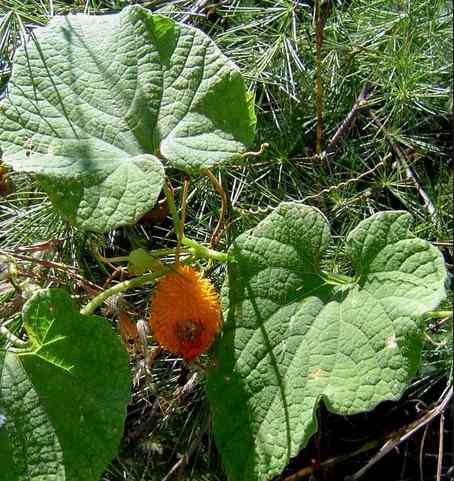 In Yoruba herbal practice, Ewe Ako Ejinrin is widely used for treating fevers, stomach disorders, infections, and inflammatory diseases. It is a climbing plant with broad leaves and tendrils that help it attach to nearby vegetation. Though its odor may seem unpleasant, the Yoruba often say, “Ewe to n run, lo maa nse oogun to lagbara,” meaning “It is the smelly herbs that hold the strongest power.” The bitterness and smell of Ewe Ako Ejinrin shows its strength in flushing out impurities from the body and restoring internal balance.
Apart from its physical healing benefits, Ewe Ako Ejinrin is also considered spiritually powerful. Traditional healers use it for cleansing rituals meant to remove bad luck, spiritual heaviness, and malevolent influences. Its ability to “chase away” unseen negative forces aligns with its medical use as an anti-infective herb that clears harmful elements from the body. The Yoruba see this duality as proof that the plant’s purpose is both medicinal and metaphysical.
Key Facts
Category: Leaf
Botanical Name: Momordica foetida
Yoruba name: Ewe Ako Ejinrin
Igbo Name: Nil
Hausa Name: Nil
Characteristics
Ewe Ako Ejinrin is a fast-growing climbing vine with long, twining stems and heart-shaped leaves. It bears small yellow flowers that later develop into elongated, greenish-yellow fruits covered in soft spikes. The fruits split open when mature, exposing bright red seeds. The plant emits a strong odor when touched or crushed. It thrives in humid, tropical environments and is commonly found climbing over shrubs and fences in villages and farms across Yorubaland.
🌿Unluck Natural Healing with Your Backyard Plants!
Ever wondered what secrets your local leafs and plants have for lifelong health? Do you know what they can cure? Stop relying solely on pills which are chemicals!
With years of experience, we’ve compiled authentic knowledge into 3 masterclass e-books:
Identification Features
Below are different ways to correctly identify Ako Ejinrin amongst other leaves in the forest:
1) Leaves: Broad, green, and heart-shaped with a slightly rough surface.
2) Stems: Twining, green, and slender with curling tendrils.
3) Flowers: Small, yellow, and delicate.
4) Fruits: Greenish-yellow, spiky, and bursting open when ripe to reveal red seeds.
5) Smell: Strong and pungent when crushed.
6) Habitat: Common in humid forests, farmland edges, and bushy areas.
Uses
1. Treatment of Malaria and Fever
Ewe Ako Ejinrin is well-known for its strong anti-fever properties. The leaves are boiled into a bitter decoction (Agbo) that helps reduce high body temperature and treat malaria-related weakness. The tea promotes sweating, clears the bloodstream of impurities, and restores appetite after recovery.
2. Relief from Stomach Pain and Indigestion
In Yoruba herbal medicine, the plant is used to treat stomach cramps, flatulence, and poor digestion. A small portion of the leaf infusion is taken to calm intestinal inflammation, reduce bloating, and improve bowel movement. The bitterness of the herb aids digestion and strengthens the stomach lining.
3. Treatment of Infections and Parasites
Ewe Ako Ejinrin possesses natural anti-microbial and anti-parasitic properties. Decoctions made from the leaves and roots are taken to cleanse the system of internal worms, urinary infections, and bacterial diseases. It is especially used for chronic infections that resist modern drugs, reflecting its deep cleansing power.
4. Management of Rheumatism and Joint Pain
The crushed leaves are often applied externally with palm oil to painful joints, swollen muscles, or areas affected by rheumatism. The herbal paste provides cooling relief, reduces inflammation, and restores flexibility in affected areas.
5. Treatment of Diabetes and High Blood Pressure
Regular intake of Ewe Ako Ejinrin decoction in small quantities is believed to help reduce blood sugar levels and improve circulation. Yoruba herbalists use it in controlled doses as part of long-term therapy to manage blood pressure and balance internal heat.
6. Postpartum Care and Blood Purification
After childbirth, Yoruba women often take Ewe Ako Ejinrin tonic to flush out retained blood, cleanse the womb, and restore strength. The herb’s bitter nature stimulates circulation and helps the body regain balance and vitality.
7. Spiritual Cleansing and Protection
Spiritually, Ewe Ako Ejinrin is used in baths and incantations to remove negative energies and restore harmony. When boiled with protective leaves such as Ewe Aje and Ewe Rinrin, it is used to wash away misfortune, envy, and spiritual blockages. Its pungent smell is said to repel evil forces and attract peace to the home.
⚡ Wait...Do You Really Know the True Secrets of the Orishas?
Why was Sango called Jakuta before he was crowned Oba Koso? What hidden power lies in Ogun Onire’s original pact? And why is Obatala worshipped as the Apex Deity?
Stop guessing! True Orisha wisdom goes far beyond surface-level stories. Check out the secrets behind Sango, Ogun, Obatala, Osun, Esu, and Oro with our comprehensive e-book series. Inside each structured guide, you'll discover:
🎁The Masterclass e-Books Available at token! Claim Your Copy Today
Conclusion
Ewe Ako Ejinrin is one of the most potent herbs in Yoruba herbal medicine. Its strong bitterness, healing fragrance, and wide range of applications make it indispensable in both physical and spiritual healing. Whether used to treat malaria, infections, and stomach ailments or for spiritual fortifications, Ewe Ako Ejinrin is a symbol of purification.
CONNECT WITH US: