support@yorubalibrary.com
+2348073529208
Ewe Ege, known widely in Yoruba land as Ewe Paki or Ewe Gbaguda, is the leaf of the cassava plant — one of the most economically crops in West Africa. While cassava roots are well-known as a staple food used for preparing garri, fufu, and lafun, the leaves themselves has a rich usefulness in Yoruba traditional medicine. For many years ago, Ewe Ege has been used not only as a vegetable but also as a healing agent, trusted by traditional healers to address both internal and external ailments.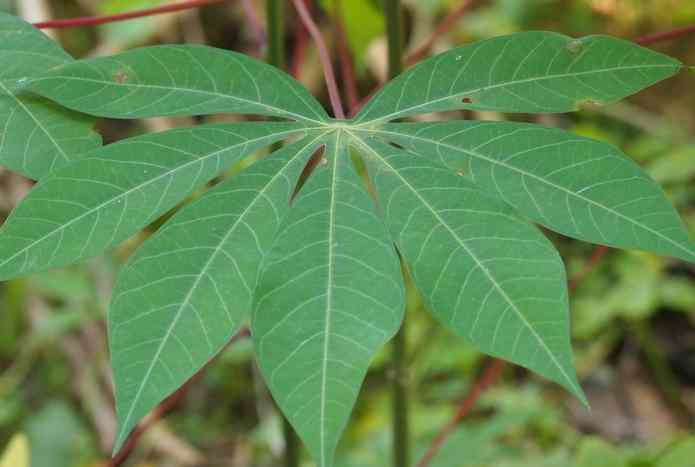 Among the Yoruba, the use of cassava leaves goes beyond nutrition. They are considered a powerful detoxifying and anti-inflammatory plant, often employed in traditional treatments for fever, infection, and rheumatism. The leaves are prepared as decoctions, poultices, or pastes, depending on the ailment being addressed. When combined with other medicinal herbs, Ewe Ege serves as an effective remedy for both body and spiritual balance.
Modern research has validated many of these traditional claims, noting that Manihot esculenta leaves are rich in proteins, vitamins (especially vitamin C and A), and bio-active compounds such as tannins, saponins, and flavonoids. Despite being a common household plant, Ewe Ege is an unsung hero in Yoruba herbal healing — a plant that nourishes the body and restores health in equal measure.
Key Facts
Category: Leaf
Botanical Name: Manihot esculenta leaf
Yoruba name: Ewe Ege or Ewe Paki or Ewe Gbaguda
Igbo Name: Nil
Hausa Name: Nil
Characteristics
Ewe Ege is easily recognizable by its palmate leaves — typically with five to seven narrow lobes radiating from a central point. The leaves are deep green in color, smooth in texture, and attached to long reddish petioles. When crushed, they release a characteristic scent with a white sap in most time. Cassava plants generally grow between 1–3 meters tall, with a woody stem and tuberous roots beneath the soil. The leaves contain cyanogenic glycosides, which must be neutralized through proper boiling or fermentation before consumption.
🌿Unluck Natural Healing with Your Backyard Plants!
Ever wondered what secrets your local leafs and plants have for lifelong health? Do you know what they can cure? Stop relying solely on pills which are chemicals!
With years of experience, we’ve compiled authentic knowledge into 3 masterclass e-books:
Identification Features
In the league of other leaves, below are distinctive features which can be correctly used to recognize Ewe Gbaguda (Ewe Ege)
• Deep green palmate leaves with long petioles.
• Grows on a tall shrub with woody stems.
• Exudes a faint bitter smell when crushed.
• Commonly found around farmlands and home gardens.
Uses
1. Fever and Malaria Treatment
A decoction of Ewe Ege is commonly used to reduce fever and relieve malaria symptoms. The boiled extract helps to purify the blood and restore vitality to the body. Some traditional healers combine it with Ewe Ewuro (bitter leaf) to increase its potency and aid faster recovery.
2. Rheumatism and Body Pain
Crushed cassava leaves are made into a poultice and applied directly to swollen or painful joints. The anti-inflammatory properties of the leaves help reduce pain and stiffness, making them a useful natural remedy for rheumatism and arthritis.
3. Wound Healing and Skin Infection
Fresh Ewe Ege leaves are pounded and applied to cuts, burns, and ulcers. The paste promotes faster healing, prevents infection, and soothes irritation. In some Yoruba communities, the leaf is mixed with palm oil to treat minor skin rashes and sores.
4. Detoxification and Liver Support
Cassava leaf decoctions are used in small, properly prepared doses to cleanse the body of toxins and support liver health. Traditional healers often recommend this remedy for individuals suffering from internal heat, jaundice, or overconsumption of alcohol.
5. General Weakness and Nutritional Support
Due to its high protein and vitamin content, Ewe Ege is consumed as a vegetable soup ingredient to strengthen the body. It is especially beneficial for nursing mothers and individuals recovering from illness.
6. Treatment for Diarrhea and Stomach Disorders
When properly boiled, cassava leaf water helps calm the stomach and control diarrhea. Its mild astringent properties reduce intestinal inflammation and restore digestive balance.
⚡ Wait...Do You Really Know the True Secrets of the Orishas?
Why was Sango called Jakuta before he was crowned Oba Koso? What hidden power lies in Ogun Onire’s original pact? And why is Obatala worshipped as the Apex Deity?
Stop guessing! True Orisha wisdom goes far beyond surface-level stories. Check out the secrets behind Sango, Ogun, Obatala, Osun, Esu, and Oro with our comprehensive e-book series. Inside each structured guide, you'll discover:
🎁The Masterclass e-Books Available at token! Claim Your Copy Today
Conclusion
Ewe Ege (also called Ewe Paki or Ewe Gbaguda) is one of the most useful and multi-functional plants in Yoruba traditional medicine. From treating fever and joint pain to aiding wound healing and detoxification, this humble leaf shows great herbal wisdom of the Yoruba people. When used with care and proper preparation, cassava leaves offer both nourishment and healing.
CONNECT WITH US: