support@yorubalibrary.com
+2348073529208
Ewe Furutu, known scientifically as Terminalia catappa, is a leaf of immense usefulness in Yoruba trado-medicine world. It is commonly called the Indian Almond tree or Tropical Almond, but among the Yoruba, it is simply known as Ewe Furutu — a plant associated with strength, renewal, and purification. The tree is easily recognized by its broad leaves, which turn bright red or yellow before falling, symbolizing the cycle of life, cleansing, and rebirth in Yoruba belief. Every part of this tree — the leaves, bark, roots, and seeds — has medicinal and spiritual functions, making it one of the most valued plants in traditional healing practices across Yorubaland.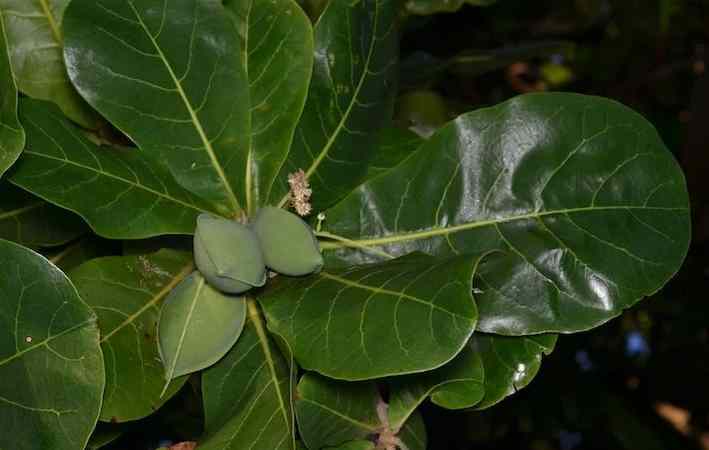 In Yoruba herbal tradition, Ewe Furutu is popular for its powerful healing properties used to treat a wide range of ailments including fever, diarrhea, skin diseases, inflammation, and liver disorders. The leaves are known for their cooling and detoxifying effects, often used to purify the blood and regulate body temperature. Yoruba herbalists also prepare infusions of the leaves to cleanse the system and strengthen internal organs such as the liver and kidneys. When the bark is boiled, it produces a reddish herbal tonic that is highly effective for stomach problems, cough, and body weakness.
Spiritually, Ewe Furutu is seen as a symbol of peace and protection. Its leaves are used in purification rituals to remove negative energy and restore calmness in the home or body. The large, fan-shaped leaves are often placed around spaces or used in spiritual baths as a sign of freshness, stability, and divine covering.
Key Facts
Category: Leaf/Fruit
Botanical Name: Terminalia catappa
Yoruba name: Ewe Furutu
Igbo Name: Nil
Hausa Name: Nil
Characteristics
Ewe Furutu grows as a large, fast-growing deciduous tree reaching heights of 10–25 meters. It has a straight trunk with horizontal branches that form a layered canopy. The leaves are large, oval, and leathery with smooth edges, turning red or yellow before they fall. The tree produces small, white flowers and oval fruits that contain edible almonds. It thrives in tropical environments, particularly near coastal areas, riverbanks, and open farmlands.
🌿Unluck Natural Healing with Your Backyard Plants!
Ever wondered what secrets your local leafs and plants have for lifelong health? Do you know what they can cure? Stop relying solely on pills which are chemicals!
With years of experience, we’ve compiled authentic knowledge into 3 masterclass e-books:
Identification Features
Highlighted below are unique features used in identifying Ewe Furutu amongst various other leaves:
1) Leaves: Large, shiny, oval-shaped, turning red or yellow when aging.
2) Bark: Greyish-brown, rough, and produces reddish juice when cut.
3) Fruit: Oval, fleshy with a hard seed inside (the almond).
4) Habitat: Commonly found in coastal areas, forests, and urban gardens.
Uses
1. Treatment of Fever and Malaria
The leaves of Ewe Furutu are boiled and used as a herbal drink to reduce fever and treat malaria symptoms. Its natural compounds help lower body heat and improve overall vitality.
2. Blood Cleansing and Detoxification
Ewe Furutu is a natural blood purifier. The leaves and bark are used in herbal decoctions to remove toxins from the bloodstream, support the liver, and restore balance to the body. Yoruba herbalists often recommend it for cleansing the system after illness or prolonged medication.
3. Treatment of Diarrhea and Stomach Disorders
Decoctions made from the bark or leaves of Ewe Furutu are used to treat diarrhea, dysentery, and other stomach-related problems. Its astringent properties help tighten the intestinal walls and stop excessive bowel movement.
4. Healing of Wounds and Skin Problems
Crushed Ewe Furutu leaves are applied to wounds, boils, and skin rashes to promote healing. The leaf extract has strong anti-bacterial and anti-inflammatory properties that prevent infection and speed up recovery.
5. Management of Liver and Kidney Disorders
The leaf and bark extracts are used to support liver and kidney health. Yoruba herbalists believe that regular use of Ewe Furutu helps cleanse these vital organs, improve digestion, and prevent internal swelling.
6. Anti-Inflammatory and Pain Relief
The plant contains compounds that relieve body pain and reduce inflammation. It is often included in herbal mixtures for arthritis, back pain, and general body stiffness.
7. Spiritual Cleansing and Protection
Ewe Furutu has an important role in Yoruba spiritual practices. Its leaves are used in cleansing baths to wash away negative energy, remove bad dreams, and attract peace. The broad leaves are also used as spiritual coverings during rituals, symbolizing divine protection and renewal.
⚡ Wait...Do You Really Know the True Secrets of the Orishas?
Why was Sango called Jakuta before he was crowned Oba Koso? What hidden power lies in Ogun Onire’s original pact? And why is Obatala worshipped as the Apex Deity?
Stop guessing! True Orisha wisdom goes far beyond surface-level stories. Check out the secrets behind Sango, Ogun, Obatala, Osun, Esu, and Oro with our comprehensive e-book series. Inside each structured guide, you'll discover:
🎁The Masterclass e-Books Available at token! Claim Your Copy Today
Conclusion
Ewe Furutu is more than a tree — it is a source of healing, cleansing, and spiritual renewal deeply rooted in Yoruba traditional knowledge. Its wide range of medicinal uses, from treating fever and stomach disorders to purifying the blood and protecting the spirit, makes it one of the most valuable plants in Yoruba herbal medicine. Beyond its physical healing properties, Ewe Furutu represents comfort, peace, and continuity — a living reminder that nature provides all that is needed to restore balance between the body and the soul.
CONNECT WITH US: