support@yorubalibrary.com
+2348073529208
As we are gradually reaching the concluding chapter of Eégún Aláré, the narrative is reaching its ultimate resolution, solidifying its place as a masterwork of Yorùbá classical literature. The royal court of the Aláàfin of Ọ̀yọ́ stands as a theater of poetic judgment, where truth has triumphed over deceit and genuine ancestral mastery has prevailed. For students preparing for WAEC and NECO examinations, this concluding phase ties together all the major thematic threads of the book: destiny, the preservation of cultural heritage, the picture of true artistry, and the inevitable downfall of malicious rivalry. 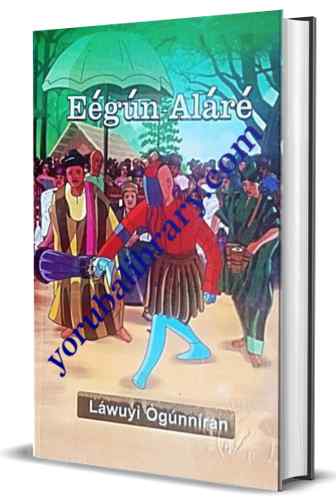 In this segment, the Aláàfin officially delivers his royal verdict, validating Ọ̀jẹ́ládé’s flawless performance, historical knowledge, and unassailable lineage. The title of Baálẹ̀ Arẹ̀kú-Eégún finds its rightful home, and the entire kingdom rejoices in a grand finale marked by drumming, dancing, and poetic chants of victory. The story closes not just with personal triumph for Ọ̀jẹ́ládé and his devoted wife Àǹséétù, but as an immortal tribute to the power of traditional masquerade arts (eégún aláré) across generations.
The Royal Verdict and Official Investiture
1) The King's Public Declaration:
Following Dúdúyemí's faltering defense and public exposure, the Aláàfin rises to address the massive assembly, officially declaring Ọ̀jẹ́ládé as the undisputed winner of the contest.
2) Bestowal of Supreme Authority:
The King takes Ọ̀jẹ́ládé by the hand, presenting him before the entire realm as the newly confirmed Baálẹ̀ Arẹ̀kú-Eégún (The Grand Master and Supreme Leader of Masquerades).
3) Rewarding Excellence:
Beyond the title, the Aláàfin grants Ọ̀jẹ́ládé special royal privileges, gifts, and the freedom to expand his artistic troupe across all territories under the crown.
Celebration, Reconciliation, and Public Joy
a) The Grand Finale Performance:
Buoyed by royal favor, Ọ̀jẹ́ládé, alongside his wife Àǹséétù, breaks into a final, breathtaking rendition of ancestral dance and drumming (ìlù aládùn), sending waves of ecstasy through the crowd.
b) Jubilation:
Spectators, chiefs, and drummers join in the celebration, turning the palace courtyard into a carnival of music, poetry, and cultural pride.
c) Vindication of Truth:
The joyful atmosphere underscores the thematic triumph of honesty, hard work, and spiritual alignment over shortcuts and deceit.
Final Character Summaries
Ọ̀jẹ́ládé:
Completes his hero's journey from a humble background to the pinnacle of traditional artistic leadership, proving worthy of his father's (Ọ̀jẹ́ Lárìnnáká) legacy.
Dúdúyemí:
Serves as a cautionary figure whose hubris and reliance on unverified claims led to his public disgrace before the highest court in the land.
The Aláàfin of Ọ̀yọ́:
Embodies wise, discerning leadership that preserves institutional integrity and rewards true cultural custodianship.
Core Moral and Thematic Lessons of the Text
1) The Inevitable Triumph of Truth:
Throughout the text, characters who honor their heritage and speak truth (òtítọ́) are ultimately vindicated, while those who rely on deceit face exposure.
2) The Sanctity of Tradition:
Traditional arts require rigorous training, moral discipline, and deep respect for ancestral taboos (èèwọ̀).
3) Inter-generational Continuity:
The narrative demonstrates how the virtues and spiritual protections of parents successfully shield and elevate their children.
BROWSE OTHER AVAILABLE WAEC/NECO TEXTS
Eégún Aláré

Òtè Òye
CONNECT WITH US: