support@yorubalibrary.com
+2348073529208
As the dramatic performance before the Aláàfin of Ọ̀yọ́ reaches its final and most decisive movement, Eégún Aláré delivers a masterclass in oral tradition, poetic memory, and poetic justice. The arena is charged with palpable tension as Ọ̀jẹ́ládé and Dúdúyemí exchange deep historical chants, tracing the origins of their families, the migrations of ancient clans, and the secrets of the masquerade tradition. In classical Yorùbá literature, public contests of this magnitude test not just theatrical skill, but the fundamental authenticity of an artist's bloodline and spiritual foundation.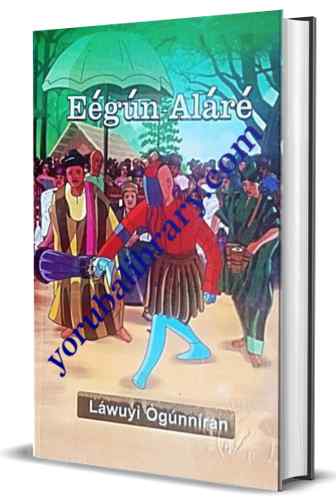 In this extensive segment, the narrative goes into complex genealogies, checking how past actions, secret covenants, and forgotten hardships make the destinies of the present generation. Dúdúyemí attempts to assert his supremacy by invoking historical narratives linked to Ọlógbojò and ancient lineages, but Ọ̀jẹ́ládé responds with unmatched precision, showing the truths that leave both the royal court and the audience surprised. The King and the assembly act as critical judges, observing every nuance of the poetic duel to determine who truly deserves the supreme title of Baálẹ̀ Arẹ̀kú-Eégún.
Furthermore, this chapter highlights the emotional and dramatic turning point where falsehood collapses under the weight of truth. As Dúdúyemí falters under the intense scrutiny of the historical chants and fails to sustain his claims, public perception shifts dramatically. The interplay between performance art, memory, and divine retribution underscores the central moral of the text: that deceit in matters of sacred heritage cannot support the test of time.
The Poetic Duel: Unraveling Ancient Genealogies and Historical Truths
1) Tracing Roots:
Ọ̀jẹ́ládé and Dúdúyemí trade extensive verses detailing the history of Ọlógbojò, Ẹ̀sà Ògbín, and ancient settlements, each trying to outmatch the other in historical accuracy.
2) The Test of Authenticity:
The Aláàfin intervenes to ensure that the contest remains focused on genuine historical lineage rather than empty showmanship, reminding both performers that true mastery requires absolute fidelity to ancestral facts.
3) Exposing Hidden Narratives:
Ọ̀jẹ́ládé masterfully recounts the trials of his forebears, linking his present artistry directly to the sacrifices of Ọ̀jẹ́ Lárìnnáká and Ìyádùnnúní.
The Turning Point: Public Reaction and Dúdúyemí's Collapse
a) The Audience's Verdict:
As Ọ̀jẹ́ládé delivers his final, flawless poetic sequences, the massive crowd breaks into thunderous applause, confirming their total awe with his performance.
b) Dúdúyemí's Failing Strength:
Under the immense pressure of the royal scrutiny and the weight of unverified claims, Dúdúyemí begins to falter, struggling to maintain his composure and losing his rhythm during his counter-chants. This made him cast a spell on Ọ̀jẹ́ládé but such was eventually neutralized by antidote given by Ọ̀jẹ́ládé's wife.
c) Divine Intervention and Exposure:
The narrative illustrates how falsehoods in spaces naturally expose themselves, leading to Dúdúyemí’s public humiliation before the King and the entire kingdom.
Character Analysis in the Final Trial
Ọ̀jẹ́ládé:
Demonstrates unshakeable poise, encyclopedic knowledge of history, and absolute alignment with his ancestral roots, supporting his status as the rightful heir to the artistic crown.
Dúdúyemí:
Represents the danger of overreaching ambition and superficial mastery, ultimately buckling under the weight of true ancestral accountability.
The Aláàfin of Ọ̀yọ́:
Maintains rigorous royal standards, ensuring that justice, truth, and cultural integrity prevail over mere entertainment.
Major Theme
1) The Superiority of Truth:
The narrative strongly solidifies the Yorùbá philosophical axiom that truth is permanent and invincible, whereas falsehood is fleeting.
2) Legitimacy in Cultural Custodianship:
Highlights that leadership roles in traditional arts (Baálẹ̀ Arẹ̀kú-Eégún) demand profound moral and genealogical integrity.
What Happened Next?
With Dúdúyemí faltering before the throne and Ọ̀jẹ́ládé standing victorious in his historical mastery, how will the Aláàfin officially bestow the ultimate crown? What final lessons does this epic clash leave for the future of the masquerade tradition?
BROWSE OTHER AVAILABLE WAEC/NECO TEXTS
Eégún Aláré

Òtè Òye
CONNECT WITH US: