support@yorubalibrary.com
+2348073529208
As we complete our comprehensive study guide for Eégún Aláré, this final batch of pages brings us to the ultimate thinking, moral takeaways, and the exhaustive cultural glossary (Alàyé Àwọn Ọ̀rọ̀ Tí Ó Takókó) provided at the conclusion of the book. In classical Yorùbá literature, epilogues and glossaries are not mere administrative additions; they serve as vital intellectual keys that unlock the philosophical depth, linguistic nuances, and historical references embedded within the narrative. 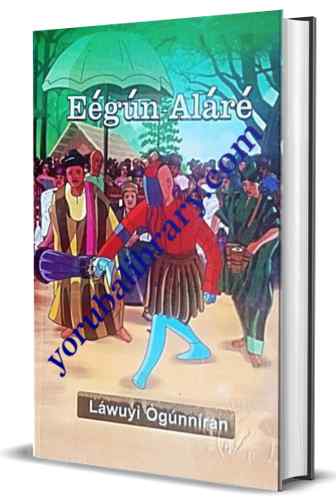 This final section reviews Ọ̀jẹ́ládé’s triumphant return to his home community after his historic validation at the Aláàfin’s court in Ọ̀yọ́. Having secured his legacy, demonstrated unshakeable moral integrity, and overcome the envious plots of rivals, he settles into his role as the undisputed master of the masquerade arts (eégún aláré). Furthermore, we examine the Yorùbá proverbs, esoteric terms, in the glossary pages, which shows the traditional cosmology of travelling performers, stage magic (idán pípa), and ancestral worships (ìbà).
The Triumphant Return and Enduring Community Legacy
1) The Hero's Welcome:
Upon returning home from Ọ̀yọ́, Ọ̀jẹ́ládé is greeted by an overwhelming wave of joy, with local performers, admirers, and family members gathering to celebrate his unprecedented triumph.
2) Institutionalizing Excellence:
Ọ̀jẹ́ládé establishes a standard of professionalism, humility, and spiritual discipline, ensuring that younger generations view the masquerade tradition as a cultural trust rather than a tool for malicious competition.
3) Honoring Divine Protection:
In his final poetic chants of thanksgiving, he attributes his survival through all trials—from distant travels to magical transformations and courtly duels—to divine grace and backing of his father, Ọ̀jẹ́ Lárìnnáká.
Decoding the Cultural Glossary and Literary Devices
a) Esoteric Terminology:
The glossary clarifies complex terms related to traditional performance, explaining the mechanics of stage illusions, protective charms, and sacred prohibitions.
b) Geographical and Historical Signposts:
References to ancient settlements such as Ìrèsà, Ọ̀gbún, Ọ̀yọ́ etc are mapped out, supporting the historical realism embedded within the fictional narrative.
c) The Philosophy of Artistry: The linguistic notes emphasize that in Yorùbá thought, true art is inseparable from ethics, spiritual accountability, and deep communal roots.
Final Character Summaries
Ọ̀jẹ́ládé:
Stands as the quintessential Yorùbá hero—talented, resilient, respectful of tradition, and ultimately triumphant over envy and treachery.
Ìyádùnnúní and Àǹséétù:
Represent the steadfast support system of family, whose loyalty and emotional anchor sustain the protagonist through thick and thin.
Core Takeaways for WAEC and NECO Students
1) Mastery of Oral Literature:
Eégún Aláré teaches students how praise poetry (oríkì), incantations (ọ̀fọ̀), and ancestral homage (ìbà) function as structural pillars in traditional drama.
2) The Triumph of Integrity:
The narrative consistently rewards diligence, honesty, and cultural reverence while exposing the vanity of malice and deceit.
BROWSE OTHER AVAILABLE WAEC/NECO TEXTS
Eégún Aláré

Òtè Òye
CONNECT WITH US: