support@yorubalibrary.com
+2348073529208
As the royal performance before the Aláàfin of Ọ̀yọ́ reaches its crescendo, the artistic contest between Ọ̀jẹ́ládé and Dúdúyemí shifts from general praise poetry into an intense, probing interrogation of secret histories, hidden identities, and ancestral lineages. The arena becomes an intellectual and spiritual battleground where each performer must prove that his knowledge is not merely superficial showmanship, but deep-seated ancestral truth. The royal court and assembled crowd watch in rapt silence as the two masters exchange rapid-fire riddles, historical chants, and poetic challenges.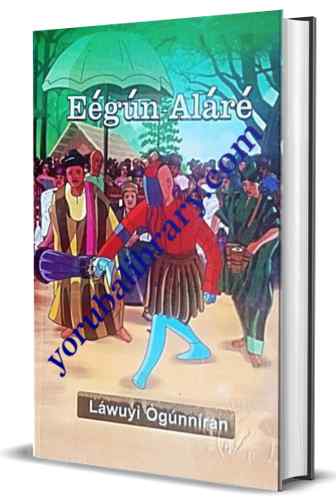 In classical Yorùbá literature, a true master masquerade performer (eégún aláré) must possess an flawless memory of family origins, migratory patterns, and secret clan taboos (èèwọ̀). Dúdúyemí challenges Ọ̀jẹ́ládé to decode the complex history of the people of Ìrèsà and Ọ̀gbún, questioning the legitimacy of his claims and testing whether he truly understands the roots of the art form he represents. This section highlights the tremendous intellectual rigor embedded in traditional oral poetry, demonstrating that words, when weaponized in public contest, carry as much weight as physical power.
Furthermore, as the poetic exchanges deepen, emotional revelations surface regarding past relationships, hidden pregnancies, and lost family connections. The boundary between stage fiction and real-life tragedy begins to blur. Ọ̀jẹ́ládé must navigate not only the public pressure of winning the Aláàfin’s crown, but also the emotional weight of discovering truths about his own father's past, his mother's sacrifices, and the hidden ties that bind him to his co-contender.
The Poetic Challenge and the Test of Ìrèsà History
1) Probing Questions in the Arena:
Dúdúyemí turns directly to Ọ̀jẹ́ládé during his chant, demanding that he explain the secrets, taboos (èèwọ̀), and historical lineages of the ancient Ìrèsà and Ọ̀gbún people.
2) Decoding the Taboos:
Ọ̀jẹ́ládé responds with astounding clarity, listing the three sacred prohibitions of the Ìrèsà lineage: the prohibition against using small woven baskets, the restriction on carrying fragile gourds, and the ban on sending small children on long errands.
3) Silencing the Crowd:
His flawless recitation of these obscure ancestral rules stuns the spectators, causing the initial murmurings of the crowd to collapse into widespread awe and admiration.
The Mystery of Lineage and Unfolding Family Secrets
a) Unveiling Hidden Realities:
Through their poetic dialogue, Dúdúyemí drops hints about a pregnant woman who left her home long ago, pointing to circumstances that mirror the early separation of Ọ̀jẹ́ Lárìnnáká and Ìyádùnnúní.
b) The Interrogation of Identity:
Ọ̀jẹ́ládé demands that Dúdúyemí state clearly whether his stories are mere theatrical fables or authentic historical events involving his own parents.
c) The Origin of the Masquerade Costume (Ẹ̀kú):
The performers move into the origins of the masquerade attire, tracing who first wore the sacred robes (ẹ̀kú) in ancient times and how the ancestral heritage was passed down.
Character Dynamics and Analysis
1) Ọ̀jẹ́ládé:
Demonstrates encyclopedic knowledge of Yorùbá history, lineage taboos, and ancestral poetry, proving that his artistic genius is matched by deep scholarship.
Dúdúyemí:
Acts as a formidable intellectual antagonist, using deep historical questions to test Ọ̀jẹ́ládé’s integrity and uncover hidden truths.
The Spectators and Court:
Evolve from passive onlookers into deeply engaged witnesses of a historic cultural and spiritual trial.
Major Theme
1) Knowledge as the Ultimate Authority:
Proves that true leadership among cultural custodians (Baálẹ̀ Arẹ̀kú-Eégún) requires mastery of history, truth, and lineage secrets, not just physical performance.
2) The Indelible Mark of Ancestry:
Highlights how family history and taboos follow individuals across generations, regardless of distance or time.
What Happened Next?
With Ọ̀jẹ́ládé successfully answering Dúdúyemí's complex historical tests and exposing secrets about their shared past, how will the Aláàfin deliver his final judgment? Who will ultimately wear the crown as the true Baálẹ̀ Arẹ̀kú-Eégún?
BROWSE OTHER AVAILABLE WAEC/NECO TEXTS
Eégún Aláré

Òtè Òye
CONNECT WITH US: