support@yorubalibrary.com
+2348073529208
This comprehensive glossary breaks down the complex terms, esoteric expressions, archaic vocabulary, and performance jargon used throughout Eégún Aláré. It is designed specifically to help students easily navigate the dense Yorùbá text for WAEC, NECO, and general literature studies.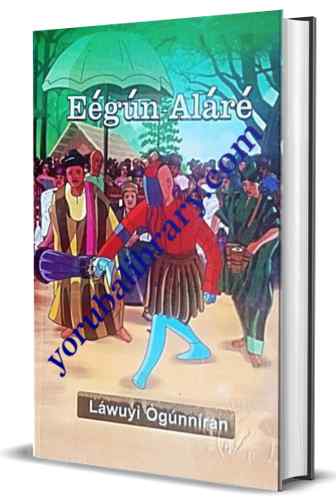 (A). Masquerade, Performance, and Stagecraft Terms
1) Eégún Aláré / Oje Aláré:
Travelling masquerade performers or traditional theatrical actors who entertain audiences with dancing, chants, and magical displays.
2) Ìdán pípa:
The act of performing magical feats, illusions, or theatrical transformations before an audience.
3) Ojú Agbo:
The central performance arena or stage ground where the masquerade displays his art.
4) Ẹ̀kú / Agò:
The sacred, complete cloth regalia or costume worn by a masquerade performer.
5) Ìbà:
A solemn ritual chant of reverence paid to higher powers, ancestors, elders, and spiritual forces before commencing a performance.
6) Esà / Èsà:
Rhythmic, poetic performance chants specific to the masquerade tradition, used to recite lineage histories and praises (oríkì).
7) Oníbàtá: The master drummer who plays the traditional Bàtá drum to guide the masquerade's movements, chants, and tempo.
8) Kẹ̀rẹ̀ẹ́: A specific type of swift, acrobatic movement or rapid spinning performed by a masquerade during an illusion.
(B) Spiritual, Mystical, and Medicinal Terms
1) Ọ̀fọ̀:
Potent spoken incantations or magical command verses deployed to trigger transformations or protection.
2) Àdó èrò:
A small gourd containing an antidote or neutralizing spell used to reverse complex magical transformations or curses.
3) Èèwọ̀: Sacred taboos, prohibitions, or restricted behaviors associated with a particular lineage, deity, or spiritual art form.
4) Ẹsẹ̀ntayé: A traditional divination ritual performed by a Babaláwo (Ifá priest) shortly after a child's birth to determine their destiny, life path, and necessary sacrifices.
5) Ẹbọ: Traditional ritual offerings or sacrifices prescribed by an oracle to avert disaster or activate good fortune.
6) Babaláwo:
An ordained Ifá priest and spiritual diviner who interprets divine wills and prescribes remedies.
Get the complete summary of Éégún Aláré and pass your forthcoming exams without hassle. It has been simplified for easiness.
(C). Vocabulary and Archaic Expressions
1) Àbá-òwú:
A magical transformation illusion where the performer wraps themselves in a cloth, appears to vanish or shrink, and expands back into full form.
2) Àgbàrá òjò:
Torrential rainwater runoff flowing down the streets during a heavy storm.
3) Àwó-'rin-tún-'rin-rọ:
An honorific title or oríkì phrase referring to a master blacksmith or ironworker who shapes and reshapes metal effortlessly.
4) Èṣù Láàlú:
The traditional Yorùbá deity of cross-roads, order, and enforcement, usually invoked during opening rituals for protection.
5) Ìgbónárá:
Intense emotional distress, frantic state, or outburst of sorrow.
6) Ìsomọ́lọ́rúkọ:
The formal traditional child-naming ceremony.
(D) Titles and Royal Classifications
1) Aláàfin:
The supreme monarch and king of the historic Ọ̀yọ́ Empire, serving as the ultimate patron of cultural arts.
2) Baálẹ̀:
The community chief, ruler, or administrative head of a town or village.
3)Baálẹ̀ Arẹ̀kú-Eégún:
The supreme ceremonial title conferred upon the overall leader and grand master of travelling masquerade performers.
4) Ìjoyè:
Title-holding chiefs, palace elders, and noble advisers within a kingdom.
(E). Lineages, Towns, and Geographic References
1) Ọ̀yọ́:
The historic kingdom and cultural heartland where the main events, palace summons, and grand contests take place.
2) Ìrèsà:
Ancient towns and historical lineages referenced extensively in the poetic duels, famous for their unique taboos (èèwọ̀) and genealogical history.
3) Ìkòyí:
A famous warrior lineage frequently referenced in masquerade praise poetry (oríkì Ìkòyí) for their bravery and archery skills.
BROWSE OTHER AVAILABLE WAEC/NECO TEXTS
Eégún Aláré

Òtè Òye
CONNECT WITH US: