support@yorubalibrary.com
+2348073529208
As we conclude the summary of Eegun Alare, to help students get prepared and excel in their studies, we have compiled list of likely WAEC/NECO questions with their answers for this book. Just ensure you read, practice and think about each questions. Find below top 20 likely questions...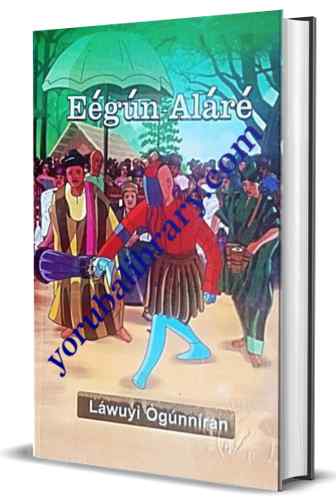 Question 1.
What motivated Ọ̀jẹ́ Lárìnnáká to leave his home town, and why couldn't his friend Dásọ́fúnjó accompany him?
Answer:
Ọ̀jẹ́ Lárìnnáká decided to leave his home town after hearing reports that theatrical performances and magical displays (iré idán pípa) were scarce in a distant town. He calculated that traveling there to display his artistic talent would bring him immense financial wealth and professional recognition.
Dásọ́fúnjó could not accompany him because he was bound by pressing domestic obligations and home responsibilities that required his immediate presence. Rather than leaving his home unattended, Dásọ́fúnjó chose to remain behind and promised to look after Ọ̀jẹ́ Lárìnnáká’s household in his absence.
Question 2.
Examine the role of Dásọ́fúnjó in the life of Ìyádùnnúní while Ọ̀jẹ́ Lárìnnáká was away on his journey.
Answer:
Dásọ́fúnjó played the role of a faithful caretaker and guardian. During Ọ̀jẹ́ Lárìnnáká’s absence, Ìyádùnnúní experienced intense emotional isolation and loneliness. Dásọ́fúnjó consistently visited the household to check on her welfare, provide financial support, and ensure she lacked nothing. When she became pregnant and later gave birth to Ọ̀jẹ́ládé, Dásọ́fúnjó stepped in to organize and finance the necessary traditional naming rites (ìsomọ́lọ́rúkọ) and consult the Ifá oracle on the child's behalf.
Question 3.
Describe the Ẹsẹ̀ntayé ritual performed for baby Ọ̀jẹ́ládé and state the specific Odù Ifá that revealed his destiny.
Answer:
The Ẹsẹ̀ntayé ritual was the traditional divination performed shortly after Ọ̀jẹ́ládé's birth to determine his destiny on earth. He was taken to a Babaláwo (Ifá priest), who cast the sacred divination chain onto the ọpọ́n Ifá (divination tray).
The Odù Ifá that appeared during the ritual was ÒSÁ MÉJÌ. The oracle revealed that Ọ̀jẹ́ládé would inherit his father's extraordinary artistic gifts and achieve greater fame than his father, but specified that strict sacrifices (ẹbọ) had to be offered to preserve his life and secure his future.
Question 4.
Itemize the specific items required for the sacrifice (ẹbọ) prescribed by the Babaláwo for Ọ̀jẹ́ládé's preservation.
Answer:
According to the Babaláwo, the sacrifice (ẹbọ) required to safeguard Ọ̀jẹ́ládé's destiny consisted of the following items:
(i) Four pigeons (ẹyẹlé mérin)
(ii) Four hens (àgbẹbọ̀ adìẹ mérin)
(iii) Four genuine kola nuts (obì ojulowo mérin)
(iv) Four strips of white cloth (òpó ọ̀pá aṣọ funfun mérin)
Question 5.
Discuss the theme of friendship and loyalty as depicted between Ọ̀jẹ́ Lárìnnáká and Dásọ́fúnjó.
Answer:
Friendship in Eégún Aláré is presented as a covenant built on mutual trust and selfless devotion. Before Ọ̀jẹ́ Lárìnnáká departed, both friends offered prayers for each other's safety and prosperity. Dásọ́fúnjó demonstrated unalloyed loyalty by keeping his promise to protect Ọ̀jẹ́ Lárìnnáká's wife and home for years. He personally funded spiritual sacrifices and naming ceremonies for Ọ̀jẹ́ládé, proving that true friendship in Yorùbá culture transcends personal convenience and extends to protecting a friend's lineage.
Question 6.
How did Ọ̀jẹ́ládé prepare himself before launching his independent career as a master masquerade performer?
Answer:
Before launching his independent career, Ọ̀jẹ́ládé underwent rigorous physical and spiritual preparation. He mastered the complex incantations (ọ̀fọ̀), ancestral praise poetry (oríkì), and stagecraft left behind by his father. Additionally, he spent three full months in seclusion (ọṣù mẹ́ta gbáko) at his father's shrine, fortifying himself with protective charms, testing his magical transformations, and assembling a dedicated troupe of drummers and apprentices before seeking royal permission to perform in new towns.
Question 7.
Describe Ọ̀jẹ́ládé's arrival in foreign towns and how he secured permission to perform.
Answer:
Upon entering a new town with his troupe, Ọ̀jẹ́ládé followed traditional protocol by first presenting himself before the town's ruler (the Baálẹ̀) and his council of chiefs (ìjoyè). He paid formal respects, paid tribute, and officially requested royal permission to entertain the community. Impressed by his poise, respectful conduct, and noble lineage, the Baálẹ̀ granted him absolute freedom to stage his performances in the central town arena (ojú agbo).
Get the complete summary of Éégún Aláré and pass your forthcoming exams without hassle. It has been simplified for easiness.
Question 8.
Explain how Ọ̀jẹ́ládé broke performance protocols during his stage displays and what enabled him to do so successfully.
Answer:
Traditionally, masquerade performers were expected to perform lengthy preliminary appeasement rituals (ìbà) to pacify local elders, witches, and spiritual forces before attempting major magic. Ọ̀jẹ́ládé broke this protocol by going straight into high-level magical transformations without waiting to conduct protracted opening rituals. He succeeded because of his overwhelming confidence, deep spiritual preparation, and the potent protective charms (òògùn) and incantations inherited from his lineage.
Question 9.
Give a detailed account of Ọ̀jẹ́ládé’s transformation into a crocodile and the circumstances that led to his betrayal.
Answer:
During a massive public performance before the Baálẹ̀ and spectators, Ọ̀jẹ́ládé reached the peak of his performance art by chanting powerful incantations (ọ̀fọ̀) and transforming his physical body into a live crocodile in the middle of the arena (ojú agbo).
Seeing him helpless in animal form, senior rival masquerades (àgbà Ọ̀jẹ́) and local elders became consumed by envy. Instead of reciting the restoring chants, they applied a neutralizing spell (òògùn èrò) that locked Ọ̀jẹ́ládé in his crocodile state, preventing him from changing back into a human being.
Question 10.
How did nature and environmental factors contribute to Ọ̀jẹ́ládé’s tragedy following his crocodile transformation?
Answer:
While Ọ̀jẹ́ládé thrashed helplessly on the ground as a crocodile, his loyal servant Ọ̀jẹ́kúnlé ran home to retrieve the counter-charm gourd (àdó èrò). However, before he could return, a sudden, violent rainstorm erupted over the town. The torrential floodwaters (àgbàrá òjò) swept through the performance arena, picking up the helpless crocodile and washing him directly into a river flowing through the community, separating him from his troupe.
Question 11.
What transpired at the riverbank when Ọ̀jẹ́ládé emerged from the water in crocodile form?
Answer:
Ọ̀jẹ́ládé emerged from the river near a woman who was shelving corn (eeri ógì). Though still in crocodile form, he spoke with a human voice, lamenting his tragic fate and delivering emotional farewell messages to his parents, wife, and child. Terrified by the sight of a speaking crocodile, the woman fled. The magical residue along the bank enabled Ọ̀jẹ́ládé to shed the animal skin one last time, and transformed back into a human being.
Question 12.
Why did the Aláàfin of Ọ̀yọ́ summon Ọ̀jẹ́ládé to his royal court?
Answer:
The Aláàfin of Ọ̀yọ́ summoned Ọ̀jẹ́ládé after news of his extraordinary talent, masterly command of incantations, and ability to overcome complex theatrical challenges spread across Yorùbáland. The King sought to host a grand cultural contest to select the most qualified, knowledgeable, and spiritually grounded master performer to be crowned with the supreme title of Baálẹ̀ Arẹ̀kú-Eégún (The Supreme Leader of Masquerades).
Question 13.
Who was Ọ̀jẹ́ládé’s primary contender at the Aláàfin’s court, and what was the nature of their contest?
Answer:
Ọ̀jẹ́ládé’s primary contender was Dúdúyemí, another highly skilled master masquerade performer. Their contest was an intellectual, poetic, and spiritual duel before the Aláàfin, his chiefs, and a massive audience. Rather than simple acrobatic dancing, the contest tested their command of ancestral homage (ìbà), historical genealogies, clan praise poetry (oríkì), and knowledge of lineage taboos (èèwọ̀).
Question 14.
Highlight sacred taboos (èèwọ̀) of the Ìrèsà lineage that Ọ̀jẹ́ládé correctly identified during the contest with Dúdúyemí.
Answer:
During the interrogation by Dúdúyemí, Ọ̀jẹ́ládé demonstrated his deep historical knowledge by correctly identifying the three taboos of the Ìrèsà people:
(a) The prohibition against using small woven baskets
(b) The restriction on carrying fragile gourds
(c) The ban on sending young children on long, perilous errands
Question 15.
Describe the reaction of the Aláàfin and the crowd when Dúdúyemí failed to sustain his arguments during the poetic duel.
Answer:
When Dúdúyemí faltered and could no longer answer Ọ̀jẹ́ládé’s probing historical questions, he lost his rhythm and became visibly confused. The crowd, which had initially cheered both performers, grew silent as Dúdúyemí's shallow claims were exposed. The Aláàfin intervened, noting that true authority cannot be built on falsehoods, and the assembly erupted in applause for Ọ̀jẹ́ládé, recognizing him as the authentic master of the art.
Question 16.
How did Ọ̀jẹ́ládé show respect to his parents during his performance before the Aláàfin?
Answer:
Throughout his performance in the royal arena, Ọ̀jẹ́ládé continuously shower praise poetry (oríkì) honoring his parents into his chants. He publicly attributed his mastery and spiritual strength to his late father, Ọ̀jẹ́ Lárìnnáká, and paid glowing tributes to his mother, Ìyádùnnúní, acknowledging that an artist's greatness is based in honoring their ancestral source.
Question 17.
What final verdict did the Aláàfin give at the conclusion of the royal contest, and what title was conferred on Ọ̀jẹ́ládé?
Answer:
The Aláàfin declared Ọ̀jẹ́ládé the undisputed winner of the contest, praising his vast knowledge of Yorùbá history, flawless incantations, and moral integrity. The King officially conferred upon him the exalted title of Baálẹ̀ Arẹ̀kú-Eégún (The Supreme Leader of Masquerades) and presented him to the entire kingdom, granting him royal patronage and grand gifts.
Question 18.
Discuss the theme of "The Triumph of Truth over Falsehood" as demonstrated in the text.
Answer:
The text strongly supports the Yorùbá worldview that truth is eternal while deceit is temporary. Dúdúyemí attempted to use superficial charm and unverified historical claims to win the supreme title at court. However, when subjected to rigorous testing by Ọ̀jẹ́ládé and the Aláàfin, his falsehoods collapsed, leading to public disgrace. Conversely, Ọ̀jẹ́ládé’s reliance on genuine historical knowledge, and truth earned him victory and royal elevation.
Question 19.
Explain the meaning and significance of the following terms in the context of the book:
(a) Ojú Agbo
(b) Àdó Èrò
(c) Ẹ̀kú
Answer:
(a) Ojú Agbo: The central performance arena or public stage where masquerades display their dancing, magical feats, and chants before an audience.
(b) Àdó Èrò: A small traditional charm gourd containing an antidote or neutralizing spell used to reverse complex magic or curses.
(c) Ẹ̀kú: The complete fabric regalia or costume worn by a masquerade performer, representing ancestral presence.
Question 20.
What moral lessons does Eégún Aláré offer to contemporary youth and students?
Answer:
(a) Diligence and Mastery:
Success requires thorough preparation, discipline, and respect for one's chosen field, as shown by Ọ̀jẹ́ládé’s dedicated training.
(b) The Danger of Envy:
Jealousy against talented peers leads to destructive behavior and moral downfall, as seen in the actions of the rival elders and Dúdúyemí.
(c) Honoring Heritage:
Staying connected to family traditions, moral values, and truth ensures divine protection and lasting elevation.
BROWSE OTHER AVAILABLE WAEC/NECO TEXTS
Eégún Aláré

Òtè Òye
CONNECT WITH US: