support@yorubalibrary.com
+2348073529208
Act 3, Scene 1 marks an important turning point in Ọ̀tẹ̀ Oyè. In Act 2, the audience sees corruption entering the process of choosing the next king. Money begins to influence the Kingmakers, powerful people begin pursuing personal interests, and the people's preferred candidate, Ariwoola, becomes a problem for those who want to control the throne.
Act 3, Scene 1 takes that corruption a step further. The people behind the scheme now move from influence to deliberate conspiracy. The scene centres on Gbádàmọ́ṣí and Majasan, who discuss how to bypass the traditional requirements for choosing the king and install their own candidate. Their plan involves interfering with the place of Ifá in the succession process and creating a king who will serve their interests. This is the point at which the Ọ̀tẹ̀ becomes an organized political plot rather than merely an expression of suspicion or disagreement.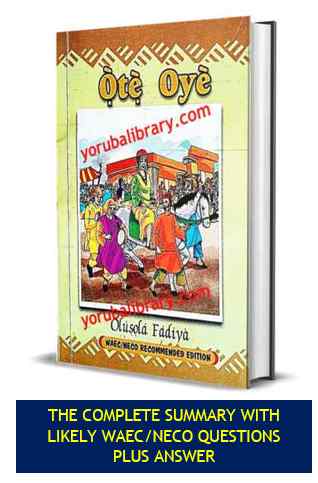 What Happens in Act 3, Scene 1?
The scene shifts to a meeting involving Gbádàmọ́ṣí and Majasan. The two conspirators discuss the next stage of their plan. Their objective is not simply to support a candidate they personally prefer. They want to manipulate the traditional process so that their preferred candidate reaches the throne. The book describes the intended candidate as a “puppet” king — someone whose position can be used to serve the interests of those behind the conspiracy. Several important things therefore happen in this scene:
• Gbádàmọ́ṣí and Majasan move their plan forward.
• They discuss how to bypass traditional requirements.
• They consider how to deal with the authority of Ifá.
• They discuss the cost of the conspiracy.
• They consider the people who must be brought into the scheme.
• Their objective is to install a king who can be controlled.
• The conflict between traditional/divine authority and human greed becomes clearer.
From Political Influence to Conspiracy This distinction is important when studying the development of the plot. In Act 2, people are lobbying, bargaining and trying to influence the Kingmakers. In Act 3, the conspirators take a more radical step. They are prepared to bypass the traditional requirements entirely. That means the problem is no longer merely: “Who should become king?”
It becomes: “How can we manipulate the entire process so that the person we want becomes king?” This is a much more serious form of political corruption. The conspirators are not trying to win an honest contest. They are trying to control the rules and outcome of the contest itself.
Gbádàmọ́ṣí as the Brain Behind the Conspiracy
Gbádàmọ́ṣí becomes particularly important in this scene. He is described as the main strategist of the conspiracy. His role is therefore more than that of an ordinary supporter of a candidate. He is the person who thinks through how the scheme can work. His wealth and influence make him dangerous because he can use material resources to bring other people into the plot. The character profile presents him as:
• wealthy and influential;
• ambitious;
• arrogant;
• greedy;
• willing to use his resources to influence other chiefs; and
• dismissive of traditional spiritual warnings.
Majasan: The Conspirator with a Guilty Conscience
Majasan participates in the conspiracy, but his characterization is different from Gbádàmọ́ṣí's. He is described as the weaker conspirator. Unlike Gbádàmọ́ṣí, who is driven strongly by ambition, Majasan is troubled by fear and eventually by regret. This difference is important. It shows that the conspirators are not necessarily united by the same level of confidence.
Gbádàmọ́ṣí appears more determined to push the plan forward, while Majasan is more vulnerable to the consequences of what they are doing. The book describes Majasan as representing the “guilty conscience” of the conspiracy and identifies his important traits as ìfòyà (fear) and ìkábàámọ̀ (regret). This characterization becomes increasingly important as the consequences of the conspiracy begin to appear.
The Plan to Install a Puppet King
One of the most important ideas in this scene is the plan to install a puppet king. A puppet king is not necessarily powerless in appearance. He may occupy the throne and possess the title of king, but those who placed him there expect to exercise influence over his decisions. This explains why the conspirators are opposed to the people's preferred candidate. Earlier, Ariwoola was identified as someone the conspirators could not control.
Therefore, their solution is to create an alternative. They want a person whose position on the throne will be connected to the conspirators' political and financial support. The danger is obvious: "If a king owes his throne to private interests, those interests may attempt to govern through him".
Why Do They Want to Bypass Tradition?
The traditional process is a problem for the conspirators because it places limits on their ability to determine the outcome. If the succession follows accepted procedures, the conspirators cannot simply impose their preferred candidate. The source therefore describes them as planning to bypass the traditional requirements, their willingness to bypass tradition demonstrates the extent of their ambition. They are no longer interested in preserving the system; They are interested in controlling it.
The Cost of the Conspiracy
Another significant detail is that Gbádàmọ́ṣí and Majasan discuss the “cost” of the conspiracy. This supports an idea already introduced in Act 2: money has become deeply connected with the succession struggle. The conspiracy requires resources. They must consider:
• whom they need to persuade;
• whom they need to influence;
• what the scheme will cost;
• how they can secure cooperation; and
• how they can keep the plan hidden.
Why Secrecy Matters
The conspirators cannot carry out their plan openly. If the people of Ojúrí discover that the succession is being manipulated, they may reject the process. The book notes that there is a lingering fear that Balógun or the people may revolt if the wrong choice is made. This fear tells us something important about the political situation. The conspirators understand that they do not possess genuine public legitimacy. They therefore depend on secrecy.
The Fear of Balógun
Balógun Akíngbọlá remains a significant obstacle to the conspirators. He represents:
• tradition;
• truth;
• justice;
• cultural knowledge; and
• the welfare of Ojúrí.
The conspirators know that someone like Balógun can challenge their manipulation. This is why their fear of the reaction of Balógun and the people is important. Their problem is not simply that they have an opposing political faction. They face people who are willing to defend the integrity of the traditional process.
A Change in the Mood of the Conspirators
The conspiracy also begins to affect the psychological state of those involved. The source later describes the conspirators as becoming increasingly afraid of one another and notes that their fear of each other begins to outweigh their fear of the law.
Major Themes in Act 3, Scene 1
1. Corruption of Leadership
The succession process is being corrupted by individuals who want to use political power for private interests. This is a continuation of the corruption introduced in Act 2.
2. Greed and Ambition
Gbádàmọ́ṣí's determination shows how personal ambition can cause an individual to disregard established values. The desire for power becomes more important than the welfare of Ojúrí.
3. Tradition Versus Manipulation
The conspirators want to bypass traditional requirements because tradition prevents them from freely controlling the outcome. The scene therefore presents tradition as an obstacle to corrupt political ambition.
4. Divine Will Versus Human Will
Ifá represents divine/traditional guidance, while the conspirators represent people trying to impose their own will. The struggle is therefore not only political but also spiritual.
5. Secrecy and Conspiracy
The conspirators must keep their plans hidden because they know that public knowledge could destroy the scheme. Secrecy becomes essential to their operation.
6. Fear and Conscience
Majasan's fear introduces the idea that wrongdoing can create internal conflict. A person may participate in a conspiracy and still be troubled by its possible consequences.
Moral Lessons
Act 3, Scene 1 teaches several important lessons:
• Ambition without moral restraint can become destructive.
• Political power should not be obtained through manipulation.
• Traditional institutions should not be deliberately corrupted for personal gain.
• A leader who becomes dependent on private interests may lose independence.
• Greed can make people challenge values that protect the entire community.
• Wrong-doing often creates fear and distrust among the people involved in it.
• Ignoring legitimate guidance for selfish reasons can have serious consequences.
• A secret plan that harms the public interest cannot easily remain hidden forever.
Important Characters
1) Gbádàmọ́ṣí
The principal strategist and leading force behind the conspiracy. His wealth, ambition and willingness to manipulate the succession make him the central antagonist in this stage of the drama.
2) Majasan
A conspirator who participates in the scheme but is more fearful and morally uncertain than Gbádàmọ́ṣí. His later fear and regret make him an important contrast to Gbádàmọ́ṣí.
3) Ariwoola
Although he is not the main participant in this scene, his importance comes from the fact that he represents the candidate preferred by the people and the candidate the conspirators believe they cannot control.
Why This Scene Is a Major Turning Point
Act 3, Scene 1 is important because it changes the nature of the story. Before this point, the audience sees: A dead king → a vacant throne → competing interests → bribery → political influence.
Now the story becomes:
Corruption → organized conspiracy → manipulation of tradition → attempted installation of a puppet king. That distinction is crucial.
CONNECT WITH US: