support@yorubalibrary.com
+2348073529208
The first two scenes of Act 2 introduce the struggle for the vacant throne. By Act 2, Scenes 3 and 4, that struggle takes a more dangerous direction. The question is no longer simply who is qualified to become the next king of Ojúrí. The process itself begins to come under the influence of money, selfish interests and political manipulation. This is where the phrase “politics of the belly” becomes important. Some people who should be protecting the interests of Ojúrí begin to think about what they can personally gain from the succession. The result is a serious threat to the unity and peace of the town.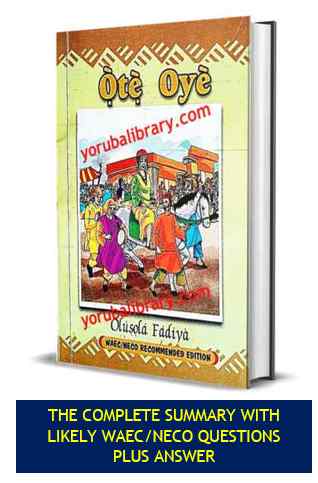 What Happens in Act 2, Scenes 3 & 4?
These scenes focus on a discussion between Sẹ̀gìlọlá and Balógun Akíngbọlá. Their conversation exposes what is happening behind the succession process. The Kingmakers are increasingly being influenced by:
• money;
• personal interests;
• promises of benefits;
• the desire to control the outcome; and
• selfish political calculations.
Balógun is disappointed that some chiefs are placing money above the peace of Ojúrí. At the same time, the discussion makes an important distinction between Ariwoola and the choice preferred by powerful elites. Ariwoola is presented as the people's choice, while some elites prefer someone they believe they can control. This creates a dangerous situation.
The “Politics of the Belly”
The expression “politics of the belly” describes a situation in which people allow personal material interests to influence political decisions. In these scenes, the problem is not simply that people have different opinions about the next king. The deeper problem is that some people begin to expect money and favours before supporting a candidate. This changes the nature of the succession process. Instead of asking: “Who is best for Ojúrí?” The question begins to become: “What will I gain if this person becomes king?”
That is a major moral and political problem. A person entrusted with helping to select a king is supposed to consider the welfare of the kingdom. When personal benefit becomes more important than public welfare, the institution itself becomes vulnerable to corruption.
Money Enters the Succession Struggle
Money becomes one of the major forces driving the division among the chiefs. The book identifies greed and money — ojukokoro àti owó — as the main cause of the division among the chiefs. This is important because the conflict in Ọ̀tẹ̀ Oyè is not presented simply as a disagreement between people who have different political opinions. It is increasingly a conflict between:
• integrity and corruption;
• public interest and personal interest;
• merit and money;
• tradition and manipulation.
Sẹ̀gìlọlá's Warning
Sẹ̀gìlọlá plays an important role in these scenes because she recognizes the danger of using money to obtain the throne. Her warning is captured in the statement: “Oyè tá a fi owó rà kò ní mu alaafia wa.”
In English:
A throne bought with money will not bring peace. This is one of the important statements to remember from this section. The statement goes beyond the immediate succession struggle. It suggests that the way power is acquired affects the kind of leadership that follows.
If a throne is obtained through corruption, the new ruler may become indebted to those who helped him obtain it. Those who provided the money may then expect favours, influence or control. Consequently, the throne may no longer serve the people freely.
Balógun Akíngbọlá's Disappointment
Balógun is deeply concerned about what is happening among the chiefs. His position is consistent with his role throughout the drama: he represents tradition, justice and the welfare of Ojúrí. He is disappointed that some of the chiefs are putting money before the peace of the town. For Balógun, the succession of a king is not a personal business transaction. It is a matter that affects the entire community. His reaction therefore provides an important contrast with those who are willing to compromise the traditional process for personal gain.
Ariwoola: The People's Choice
Another important point in these scenes is the position of Ariwoola. The source identifies Ariwoola as the choice of the people. This becomes a major source of tension because the people and the elites do not necessarily want the same outcome. The people support Ariwoola, while some powerful individuals prefer a candidate they believe they can control. This gives the succession struggle a deeper political meaning. The issue becomes: "Should the new king be someone chosen because he is acceptable to the people, or someone preferred because powerful individuals can influence him?"
Why the Conspirators Do Not Want the People's Choice
The book gives a direct reason why the conspirators dislike the candidate preferred by the people: They cannot control him. This is a very important examination point. It shows that the opposition to the people's choice is not necessarily based on the candidate being unqualified. Instead, the problem is that a leader who cannot be controlled is less useful to people who want to manipulate the throne for their own interests. This reveals the real danger behind the conspiracy. The conspirators do not simply want a king. They want a king they can influence.
The Conflict Between Merit and Money
One of the most important ideas running through this section is the movement from merit to money. A proper succession process should ask questions such as:
• Is the candidate suitable?
• Is the candidate capable of leading?
• Can the candidate protect the interests of Ojúrí?
• Does the candidate have the qualities expected of a king?
But corruption changes those questions. Money begins to determine:
• who receives support;
• who influences the Kingmakers;
• whose candidate gains an advantage; and
• who can potentially control the throne.
The Threat to the Unity of Ojúrí
The effects of corruption are not limited to the palace. The book specifically explains that the unity of Ojúrí is beginning to crumble because of greed. This is important. A community may survive disagreement when people are acting honestly and pursuing what they believe is best for everyone.
But when individuals begin manipulating public institutions for personal gain, disagreement can become division. That is what begins happening in Ojúrí. The succession process, which should help the town move peacefully from one reign to another, is instead becoming a source of suspicion and conflict.
Tradition Versus Selfish Interest
The central conflict in these scenes can be summarized as: "Àṣà ìṣẹ̀ǹbáyé vs. ìmọ̀tara-ẹni". Traditional values demand responsibility toward the community while selfish interest demands personal benefit. The Kingmakers are therefore placed in an important moral position. If they protect tradition, they help preserve the stability of Ojúrí. If they allow money and personal interests to determine their decisions, they help create the conditions for the Ọ̀tẹ̀ that follows.
Major Themes in Act 2, Scenes 3 & 4
1. Greed and Corruption
Money begins to influence people who should be acting in the interest of the community. The scene demonstrates how greed can corrupt institutions of leadership.
2. Politics of the Belly
Personal material benefit becomes part of political decision-making. The chiefs are no longer dealing with the succession purely as a traditional responsibility.
3. Leadership and Integrity
The scenes ask an important question: "What makes someone worthy of participating in the selection of a king?". The answer cannot simply be political position. Such responsibility also requires integrity.
4. Public Interest Versus Personal Interest
The people want a leader they believe is suitable, while powerful individuals want someone they can control. This creates a direct conflict between what benefits the community and what benefits individuals.
5. Money Versus Merit
The succession struggle begins to move away from choosing a person based on suitability and toward choosing according to financial and political influence. This becomes one of the most important conflicts in the drama.
6. Threat to Community Unity
Greed among the chiefs begins to divide Ojúrí. A disagreement over leadership therefore develops into a wider problem affecting the entire town.
Moral Lessons
The scenes teach several important lessons:
• Money should not determine who occupies a position of public responsibility.
• A leader chosen through corruption may find it difficult to govern independently.
• People entrusted with traditional responsibilities must protect the interests of the community.
• Greed among leaders can destroy unity.
• Political power should not be treated as a personal commodity.
• A person who accepts money to compromise an important responsibility may damage an entire community.
• The welfare of the people should come before personal gain.
• A peaceful community requires leaders who value integrity over material benefit.
Characters in Act 2, Scenes 3 & 4
a) Sẹ̀gìlọlá
She recognizes the danger surrounding the succession process and warns against obtaining the throne through money.
b) Balógun Akíngbọlá
He is disappointed by the chiefs who place money above the peace of Ojúrí. He continues to stand for tradition, justice and the welfare of the community.
c) The Kingmakers / Afọbajẹ
They are at the centre of the succession process. Their susceptibility to money and personal interests creates the conditions for the later conspiracy.
d) Ariwoola
He represents the candidate preferred by the people. His position becomes important because powerful individuals prefer someone they can control.
e) Gbádàmọ́ṣí
Although the full conspiracy becomes clearer later, his political influence is already evident. He is lobbying for his preferred choice and represents the growing role of personal ambition in the succession struggle.
Why Act 2, Scenes 3 & 4 Are Important
These scenes are important because they expose the internal corruption behind the succession struggle.
1) Act 2, Scene 1 shows ordinary people discussing the succession.
2) Act 2, Scene 2 introduces the formal political struggle among the Kingmakers and different interests.
3) But Scenes 3 and 4 reveal something more disturbing: The people responsible for protecting the succession process are themselves becoming influenced by money and selfish interests. This creates the conditions for the next stage of the story.
The progression is now:
Vacant throne → Competing candidates → Political interests → Money and favours → Corruption of Kingmakers → Conspiracy
CONNECT WITH US: