support@yorubalibrary.com
+2348073529208, 07038599574
Ìlárá-Mọ̀kín is a prominent Yoruba town popular for its unique traditions, agricultural wealth, and strong sense of community. Located in the southwestern region of Nigeria, Ìlárá-Mọ̀kín is part of the larger cultural and historical landscape of Yorubaland. Depending on the specific context, there are Ìlárá-Mọ̀kín settlements in both Ogun and Ondo States — notably Ìlárá-Mọ̀kín-Remo in Ogun State and Ìlárá-Mọ̀kín-Mokin in Ondo State — each sharing the name but maintaining unique historical narratives. Regardless of the location, Ìlárá-Mọ̀kín towns are widely known for their hospitality.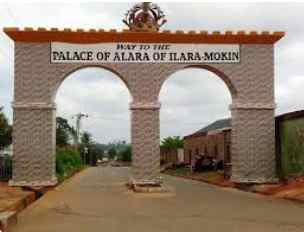
The name Ìlárá-Mọ̀kín is said to be derived from early settlement stories passed down through generations, often linked to the first rulers or founders who established the community in fertile areas suitable for farming. These towns were traditionally ruled by respected monarchs — such as the Alara — whose position symbolizes authority, unity, and the continuity of customs. Over the centuries, Ìlárá-Mọ̀kín people have maintained a balance between honoring their traditions and adapting to modern progress.
Social gatherings, festivals, and market days remain central to Ìlárá-Mọ̀kín life. The Oriki of Ìlárá-Mọ̀kín serves as both a historical record and a poetic celebration, capturing the bravery, wisdom, and virtues of its people.
Location and Geography
• Ìlárá-Mọ̀kín-Remo is located in Remo land, Ogun State, close to other Remo towns like Sagamu and Iperu.
• Ìlárá-Mọ̀kín-Mokin lies within Ifedore Local Government Area of Ondo State, near Akure.
Both share favorable geography for agriculture, surrounded by farmlands, small rivers, and road links that connect them to major Yoruba cities.
Cultural and Historical Significance
Ìlárá-Mọ̀kín towns are traditionally ruled by the Alara, a monarch whose title dates back centuries. The kingship institution plays a key role in the preservation of cultural values and community cohesion. Annual festivals — including harvest celebrations and chieftaincy ceremonies — attract indigenes and visitors alike.
The people of Ìlárá-Mọ̀kín value respect for elders, communal labor, and educational growth. In many ways, Ìlárá-Mọ̀kín stands as a microcosm of broader Yoruba ideals — balancing hard work, tradition, and a welcoming spirit.
People and Occupations
Agriculture is the foundation of Ìlárá-Mọ̀kín’s economy. Farmers cultivate crops such as yam, cassava, maize, and vegetables, while others engage in cocoa and kola nut farming. Trading, tailoring, teaching, and artisan work are also common among residents.
Unique Features of Ìlárá-Mọ̀kín
• Royal Heritage –
The Alara throne, a respected and symbolic leadership seat.
• Market Days –
Serving as both economic and social gathering points.
• Cultural Festivals –
Bringing together indigenes from across Nigeria and the diaspora.
Oriki Ilu Ìlárá-Mọ̀kín
Below is the traditional Oriki (praise poetry) of Ìlárá-Mọ̀kín.
Ilara omo a sawo gbeni
Omo ewu sara lolo kan i yanko
Anbosibosi elede a fifo lara
Ilara fe loko
Obrewa n naga
Oburewa giredo
Je n yan temi ko o to yanko
B'afinju ba loko tan
L'Oburewa n yan.
Ilara omo A-buna-bu-toore
Ilara omo A-buna-bu-toore
Omo owo yale sun
Omo o-ponwo-le
O ponwo le tan
O tun gbe owo ga
O wa n bi owo leere pe
Igba yi si o de da o?
Owo yi oun ko de lo
Sebi odo eni o pon un le
Odo eni o gbe un ga la a wa
Owo wa a dele Ilara o yaro
Ilara wa n fowo rale
Ilara wa n fowo kole
Ilara wa n ti kara bo si gbagede
Omo a ti ile bo sile
A ti odede bo sodede
Omo a gbehinkule elegan
O ni ibi won ba ti n ganni la a gba
Conclusion
Ìlárá-Mọ̀kín remains a shining example of Yoruba identity, which is culturally loaded.
Need more? Browse through our Oriki Gallery today, at zero cost.
Check out the detailed Oriki of Abeokuta, the capi…
The authentic Oriki of the Awori people, one of th…
CONNECT WITH US: