support@yorubalibrary.com
+2348073529208
Among the oriṣa (deities) of the Yoruba, Ṣàngó stands out as a force of authority, intensity, and visible power. He is associated with thunder, lightning, justice, and decisive action. Stories about him are not quiet or distant—they are vivid, dramatic, and often tied to real-world experiences such as storms, sudden death, and the fear of divine retribution. Because of this, everything connected to Ṣàngó has a certain weight, including the songs, chants, and performances dedicated to him. One of the most expressive of these is known as Ṣàngó-Pípè.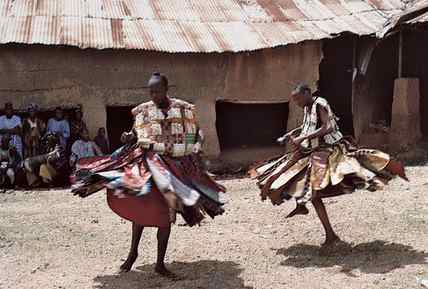 Ṣàngó-Pípè is a specialized form of oral literature performed by devotees of Ṣàngó, known as Adósù Ṣàngó. These are individuals initiated into the worship of the deity, and they carry both the spiritual responsibility and cultural knowledge required to perform such chants. Unlike casual songs, Ṣàngó-Pípè is not separated from ritual life. It exists within ceremonies, festivals, and moments where the presence of Ṣàngó is acknowledged or invoked.
The structure of Ṣàngó-Pípè shows the nature of the deity it honors. It is energetic, rhythmic, and commanding. The performance is not meant to be passive or distant; it demands attention and participation. When it is rendered, it often includes coordinated dance, strong vocal projection, and the unmistakable sound of the Bàtá drum. Together, these elements create an atmosphere that is both celebratory and reverent.
An important aspect of Ṣàngó-Pípè is its connection to real-life events. In Yoruba belief, Ṣàngó is known to strike down offenders with thunderstones, called Edun Ara. When such an event is believed to have occurred—particularly in cases of sudden or unusual death—rituals must be performed by Ṣàngó devotees. During these rituals, Ṣàngó-Pípè is not just performed for entertainment; it becomes part of the spiritual process, acknowledging the power of the deity and addressing the situation at hand.
Another dimension that makes Ṣàngó-Pípè unique is its gender dynamic. While both men and women are part of the Adósù Ṣàngó community, it is often women who take the lead in rendering these chants. Their voices, movements, and presence shape the performance in a way that distinguishes it from other forms of Yoruba oral literature where male dominance is more pronounced. This does not diminish the role of men but highlights a balance of participation that is specific to Ṣàngó worship.
Ṣàngó-Pípè is also tied to festivals. During annual celebrations dedicated to Ṣàngó, communities gather to honor the deity through ritual, music, and performance. These festivals are not only religious events but also cultural gatherings that shows identity and continuity. Within this setting, Ṣàngó-Pípè serves as a central element, connecting participants through shared rhythm and expression.
What makes this form of oral literature particularly compelling is how it blends multiple elements—voice, drum, dance, and belief—into a unified performance. It is not simply about what is said, but how it is said, how it is heard, and how it is felt. The chant carries meaning, but the performance gives that meaning life.
⚡ Wait...Do You Really Know the True Secrets of the Orishas?
Why was Sango called Jakuta before he was crowned Oba Koso? What hidden power lies in Ogun Onire’s original pact? And why is Obatala worshipped as the Apex Deity?
Stop guessing! True Orisha wisdom goes far beyond surface-level stories. Check out the secrets behind Sango, Ogun, Obatala, Osun, Esu, and Oro with our comprehensive e-book series. Inside each structured guide, you'll discover:
🎁The Masterclass e-Books Available at token! Claim Your Copy Today
Who Are the Adósù Ṣàngó?
Adósù Ṣàngó refers to the devotees and worshippers of Ṣàngó. These individuals are initiated into the practices and rituals associated with the deity. Membership is not limited by gender; both men and women can belong to this group, and each has roles to play within the tradition.
The leadership of Adósù Ṣàngó is held by the Baba Mogba, the chief priest responsible for overseeing rituals, maintaining order, and preserving the knowledge associated with Ṣàngó worship. His authority ensures that practices like Ṣàngó-Pípè are performed correctly and within the bounds of tradition.
When Ṣàngó-Pípè is Performed
Ṣàngó-Pípè is most prominently performed during Ṣàngó festivals. These gatherings bring together devotees and community members to honor the deity through music, dance, and ritual acts. The chant becomes a central feature of these celebrations, setting the tone and guiding the flow of the event.
Beyond festivals, Ṣàngó-Pípè also appears in more serious contexts. When a death is believed to be caused by Ṣàngó through the use of Edun Ara (thunderstone), specific rituals must be carried out. During these rites, the chant serves as both acknowledgment and response to the perceived action of the deity.
The Role of Women in Ṣàngó-Pípè Performance
One of the defining features of Ṣàngó-Pípè is the prominent role of women in its performance. While men are active participants in Ṣàngó worship, women often lead the chanting and dancing during Ṣàngó-Pípè.
Their delivery is characterized by strong vocal expression and coordinated movement. The dance is not separate from the chant; it is part of the communication. Through gesture, rhythm, and voice, the performers convey both reverence and energy.
This gender dynamic sets Ṣàngó-Pípè apart from other forms such as È̩ṣà-Pípè, where certain vocal techniques are restricted to men. In Ṣàngó-Pípè, women’s voices are central to the performance experience.
Call-and-Response Structure and Performance Style
Ṣàngó-Pípè typically follows a call-and-response pattern. A lead chanter introduces a line, and others respond in chorus. This structure creates a rhythmic flow that encourages participation and keeps the performance dynamic.
The repetition within the chant allows for emphasis and variation. As the performance continues, the energy often builds, supported by both vocal intensity and physical movement.
🌿Unluck Natural Healing with Your Backyard Plants!
Ever wondered what secrets your local leafs and plants have for lifelong health? Do you know what they can cure? Stop relying solely on pills which are chemicals!
With years of experience, we’ve compiled authentic knowledge into 3 masterclass e-books:
The Power of Bàtá Drum in Ṣàngó-Pípè
The Bàtá drum is essential to Ṣàngó-Pípè. Its rhythms are closely associated with Ṣàngó and are used to communicate specific patterns recognized within the tradition.
During the performance, the drum interacts with the chant, guiding tempo and reinforcing key moments. The sound of the Bàtá adds depth and structure, ensuring that the chant remains coordinated and impactful.
Spiritual Context: Edun Ara and Ritual Response
In Yoruba belief, Edun Ara represents the physical manifestation of Ṣàngó’s power—stones believed to fall from the sky during thunderstorms. When such stones are associated with a death, it is interpreted as an act of Ṣàngó.
In these situations, Ṣàngó devotees must perform rituals to address the event. Ṣàngó-Pípè becomes part of this process, serving as a vocal acknowledgment of the deity’s action and a means of maintaining spiritual balance.
Example of Practical Rendition of Ṣàngó-Pípè
Checkout the uncommon rendition example of Sango Pipe chants:
Oro gori oparun jokoo
Eegun bori, ori bo
Ako alongo ti wewu ododo
O benikan ja, fowo gun gbogbo ile loju
Oko mi ko o ma ba mi ja fogberi yorua
A-to-se-ni-o-o-gbo
Oko Oyadolu ko o ma seru e sile wa
Mijo ti o pa Fajinmi Ibadan
Nijo ti o pa Fajinmi Oyo
Ajelele bi eegun
Omo kekere o gbodo sunkun omu
Bee ni Ilogi won o gbodo solo po
Egbe o o o
Omo awure-la o o
During performance, the lead voice rises above the rhythm of the Bàtá drum, initiating the chant. The chorus responds with precision, while dancers move in sync with the beat. The energy is sustained through repetition, variation, and coordinated movement, creating a performance that is both structured and expressive.
Cultural Significance and Continuity
Ṣàngó-Pípè is more than a chant; it is a living expression of belief, identity, and continuity. It connects devotees to the history and power of Ṣàngó while cementing the structure of the community that preserves this tradition.
Even as society changes, Ṣàngó-Pípè remains relevant because it adapts without losing its core meaning. It continues to be performed, taught, and experienced, ensuring that the voice of Ṣàngó is not silenced.
CONNECT WITH US: