support@yorubalibrary.com
+2348073529208
When Yoruba people want to say prayer to ward evil forces away and be triumphant, they will say "Oju oro ni leke omi, Osibata ni leke odo..." The Osibata in the context is a special leaf we want to discuss in this post today.
Among the Yoruba people, water-based plants are not only admired for their beauty but are often used due to their spiritual and healing properties. One such plant is Osibata, commonly known as the Water Lily. This aquatic plant is embedded in Yoruba spirituality and herbal medicine. Known for growing in still or slow-moving waters, Osibata symbolizes purity, renewal, and spiritual connection.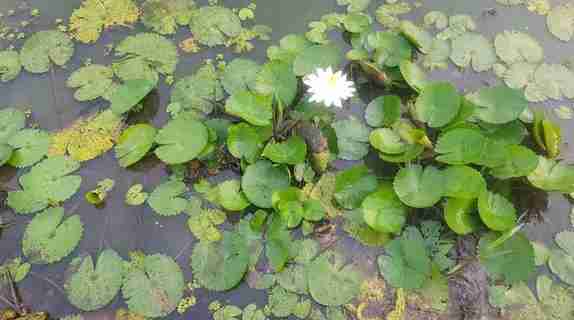
Osibata is more than just a beautiful plant—it is a potent tool used by Yoruba herbalists and spiritualists for healing the body and cleansing the soul. It is especially prominent in rituals involving water deities like Yemoja and Osun, where it plays a role in prayers, offerings, and spiritual baths. Its roots, leaves, and sometimes flowers are employed for both internal and external applications.
Key Facts
Category: Leaf
Botanical Name: Nymphaea lotus
Common Name: Water Lilly
Yoruba name: Ewe Osibata
Igbo Name: Nil
Hausa Name: Nil
Characteristics of Osibata
• Growth Habit:
Aquatic perennial plant with floating leaves and flowers.
• Leaves:
Large, round, floating leaves that spread widely on water surfaces.
• Flowers:
Beautiful white or bluish flowers that open in the evening or at night, known for their fragrant scent.
• Habitat:
Found in ponds, slow rivers, lakes, and wetlands across tropical Africa.
Traditional Uses in Yoruba Medicine
1. Spiritual Cleansing and Protection
Ewe Osibata is popular for spiritual baths used in purification rituals. These are often performed to remove negative energies, attract blessings, and restore spiritual balance.
2. Fertility and Womb Cleansing
The roots and leaves are used in decoctions to cleanse the womb, regulate menstruation, and promote fertility in women.
3. Calming the Nervous System
Teas made from the leaves of Osibata are traditionally used to calm anxiety, treat insomnia, and stabilize emotional imbalance.
4. Wound Healing and Skin Treatment
The leaves are crushed and applied externally to treat rashes, boils, and skin inflammation, thanks to their soothing and antimicrobial effects.
5. Aphrodisiac and Libido Support
Some parts of the Water Lily are believed to act as natural aphrodisiacs, especially in men, when combined with other herbs.
🌿Unluck Natural Healing with Your Backyard Plants!
Ever wondered what secrets your local leafs and plants have for lifelong health? Do you know what they can cure? Stop relying solely on pills which are chemicals!
With years of experience, we’ve compiled authentic knowledge into 3 masterclass e-books:
Healing Properties of Osibata
• Sedative: Helps reduce stress, anxiety, and promote restful sleep.
• Anti-inflammatory: Reduces swelling and skin irritations when used topically.
• Anti-bacterial: Fights infections and speeds up wound healing.
• Reproductive Tonic: Supports uterine health and regulates menstrual cycles.
• Spiritual Energizer: Used in sacred baths and offerings to restore spiritual energy.
Functions in Yoruba Traditional Medicine
• Used in omi ero (spiritual water) during Ifa and Orisa rituals.
• Plays a role in ebo (sacrificial offerings) to water deities.
• Forms part of herbal baths for children to bring calmness and good luck.
• Combined with other herbs to treat spiritual afflictions and emotional disturbances.
• Used to attract love and peace in domestic settings.
⚡ Wait...Do You Really Know the True Secrets of the Orishas?
Why was Sango called Jakuta before he was crowned Oba Koso? What hidden power lies in Ogun Onire’s original pact? And why is Obatala worshipped as the Apex Deity?
Stop guessing! True Orisha wisdom goes far beyond surface-level stories. Check out the secrets behind Sango, Ogun, Obatala, Osun, Esu, and Oro with our comprehensive e-book series. Inside each structured guide, you'll discover:
🎁The Masterclass e-Books Available at token! Claim Your Copy Today
Conclusion
Osibata (Nymphaea lotus), the Water Lily, is an example of how nature, beauty, and healing coexist in Yoruba traditional knowledge.
CONNECT WITH US: